

What Is The Size Of The Makeup Industry
Long controlled by retail conglomerates, the beauty industry has turned online.
Once "challenger" brands similar IPSY, Glossier, and Fenty are at present household names — spanning geographies and demographics alike.
Entrepreneurs rush to greet a new wave of consumers seeking fresh norms and niche products. Clinging to enterprise condition, CPG articles respond by either acquiring their contained counterparts, partnering with them, or launching private-label alternatives.
Did COVID-19 negatively bear upon sales? Yes. Does brick-and-mortar even so dominate? Too, yes. Just …
Is the dazzler manufacture growing? Particularly ecommerce cosmetics in 2021, 2022, and beyond? Absolutely.
Statistics, trends, and strategies guide the way forward. That's exactly what this exhaustive report will embrace:
- Statistics: Dazzler Industry Market Share & Growth in 2021
- Trends: Insight from 2022'due south Summit Cosmetics Brands & Companies
- Strategies: Your Ecommerce Marketing Growth Program 'Make Over'

Don't miss that last department …
There y'all'll find detailed examples, packed with tactics and lessons, from 3 fast-growing directly-to-consumer (DTC) companies.
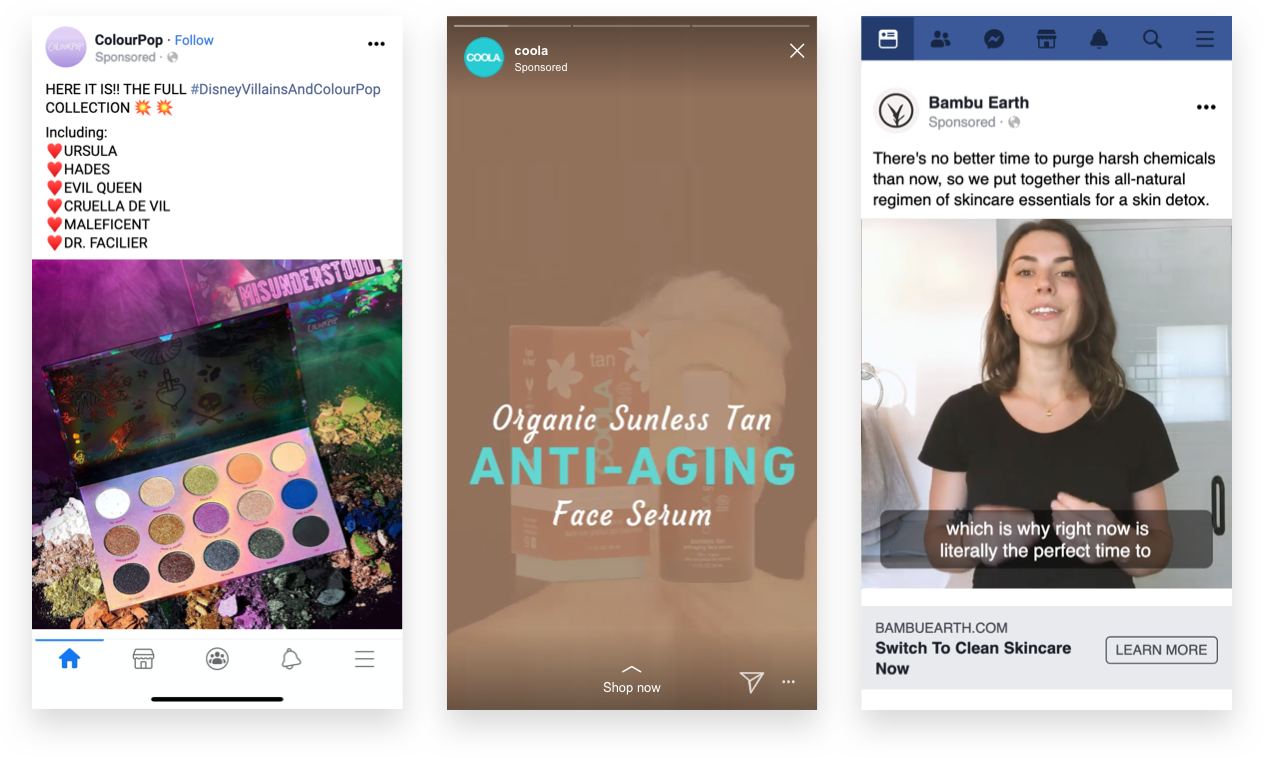
ColourPop
In a competitive market, this indie make stood out against expensive rivals with artistic that highlighted product quality. The payoff?
5x return on prospecting campaigns, 7.5x return on remarketing efforts, and 15x render on its social campaigns fabricated in collaboration with Disney.
Coola
As a brand that wasn't digitally native, the eco-conscious retailer's hurdle was gaining traffic online. By selling through product funnels using Facebook advertizing, information technology offered customers the niche products they really needed.
Conversions increased, repeat customers lifted +l%, and the brand hit 140% twelvemonth-over-year growth.
Bambu Earth
Struggling with low traffic and dismal conversion rate that no new artistic or meliorate-performing ad could set — this clean-dazzler make needed a refresh. Its lifeline came in the form of an online "Skin Quiz," powerhouse UGC, and insights from customers seeded throughout the funnel.
The results? 25x revenue YoY, two.5x AOV, and profitability for the first time.
Statistics: Beauty Industry Marketplace Share & Growth in 2021
For the purpose of this report, we'll divide beauty into iii categories: skincare, color cosmetics (make-up), and fragrance. Though closely related, we've separated health and health — i.east., personal intendance — into its own ecommerce guide.
Beauty Industry Statistics and Market Research: Global & US
Globally, the industry is strong and just getting stronger.
How big is the beauty industry? Up from $483B in 2020 to $511B in 2021 — and with an annual compounded growth rate of 4.75% worldwide — it's predicted to exceed $716B by 2025. And $784.6B by 2027.
The kindling? Rapid expansion through digital channels and the attraction of more customers willing to pay higher prices for higher quality.
As emerging nations abound in purchasing power and become globalized, they offer budding promise for international companies to enter — if they bring higher quality products than those bachelor locally along with them.
By geography, Asia Pacific and North America dominated; bookkeeping for more than 60% of the total.

With shopping preferences differing from county-to-state, brands looking to rule on a global scale must follow a customer-centric model that intersects both digital and physical channels.
Much like the experiential home furnishings manufacture, offline shopping still rules — luring a whopping 81% of buyers. At the aforementioned fourth dimension, offline's share is declining while online climbs.
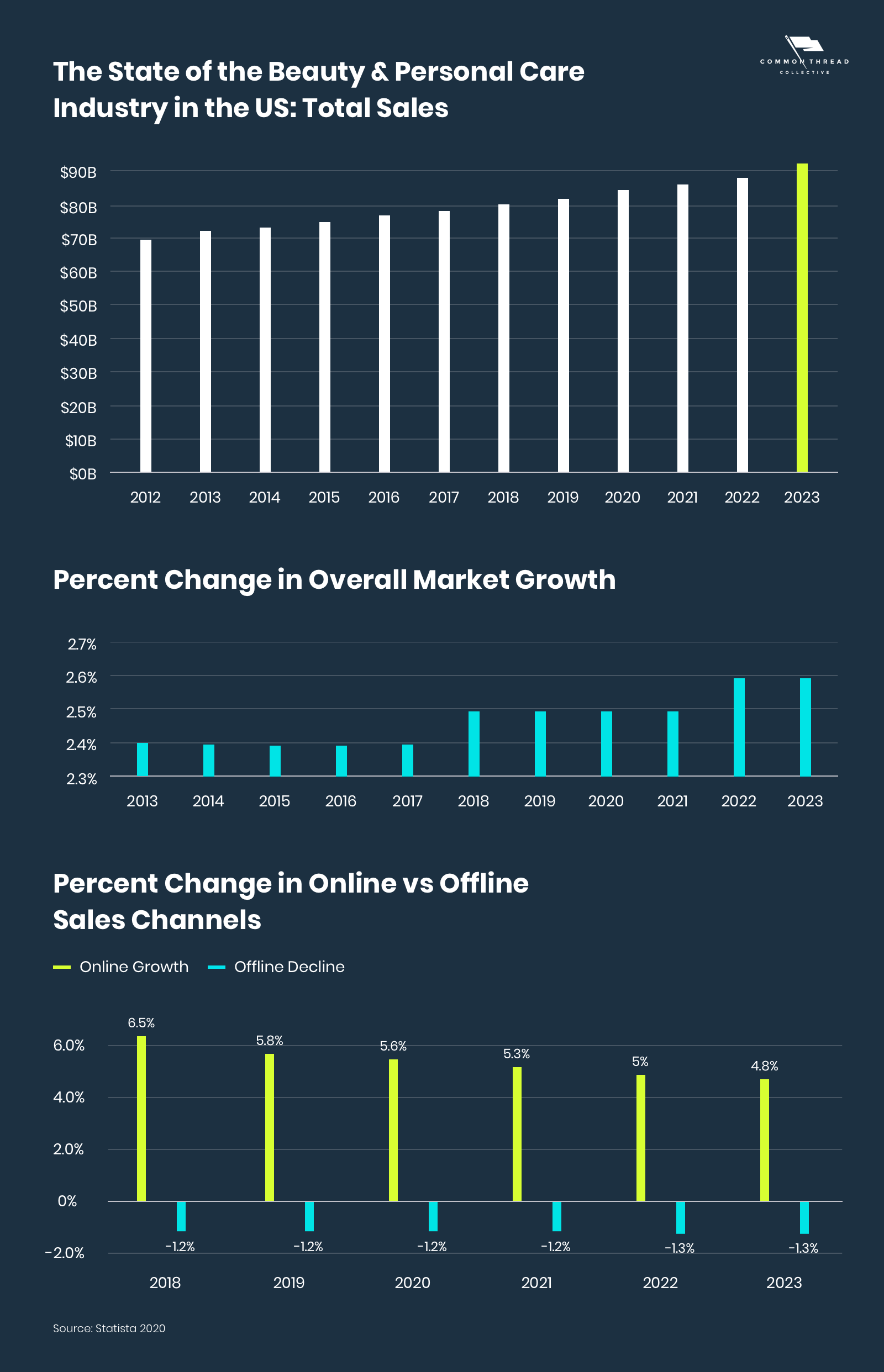
Though the distribution methods are evolving, traditional chains still play the largest function in the US. For anyone following ecommerce'due south trending growth, that shift is inappreciably a surprise.
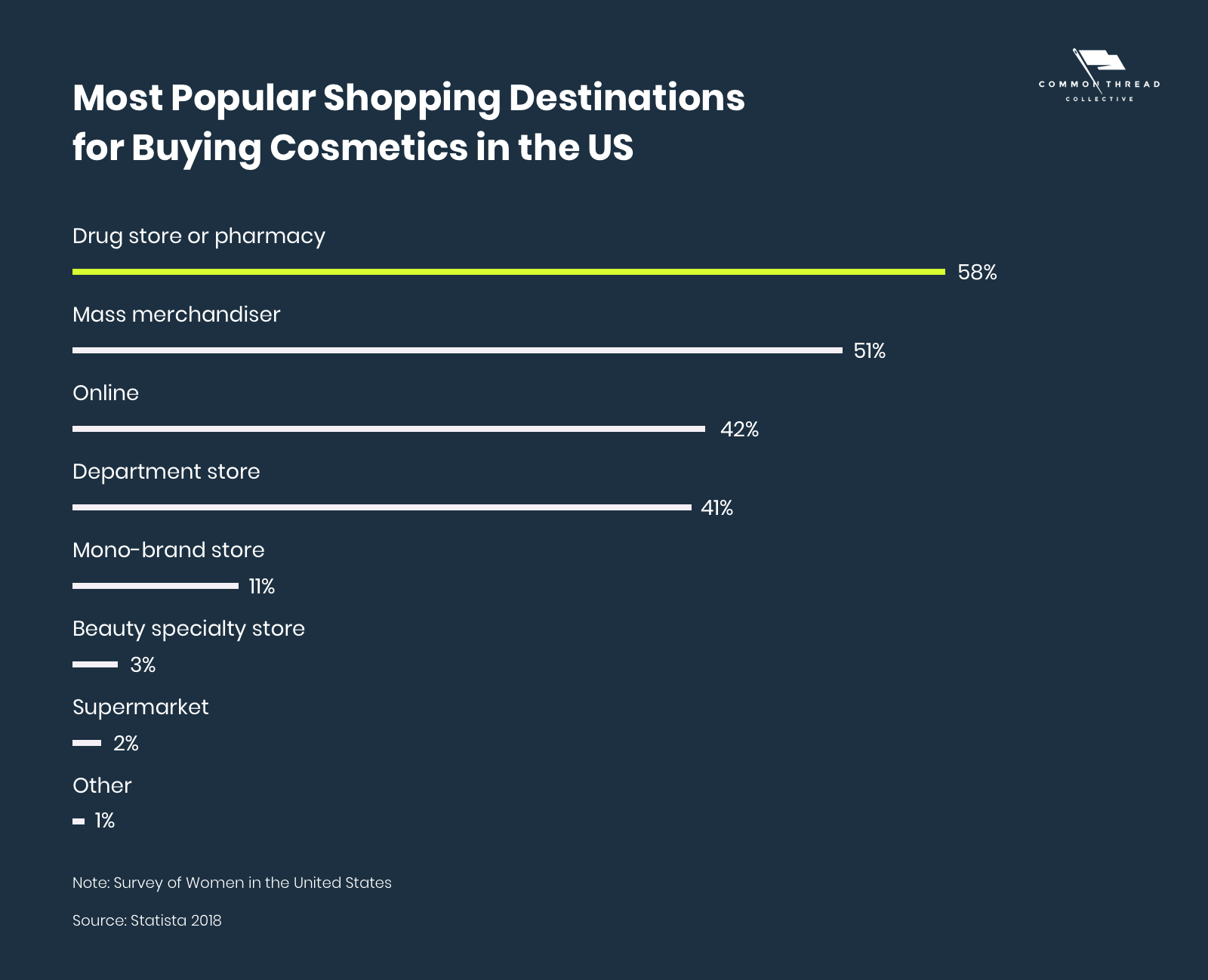
Aside from superstores like Walmart and Target, the biggest vertical-specific players are Ulta and Sephora.
The same holds true on a worldwide scale.
For more than a century, product has been controlled by a handful of multinational conglomerates. The long-reigning legacies — L'Oréal, Unilever, Procter & Gamble, and Estée Lauder Companies — fabricated upwards a whopping 81.7% of worldwide revenue in 2019.
In the United states of america, all hopes turn to ecommerce.
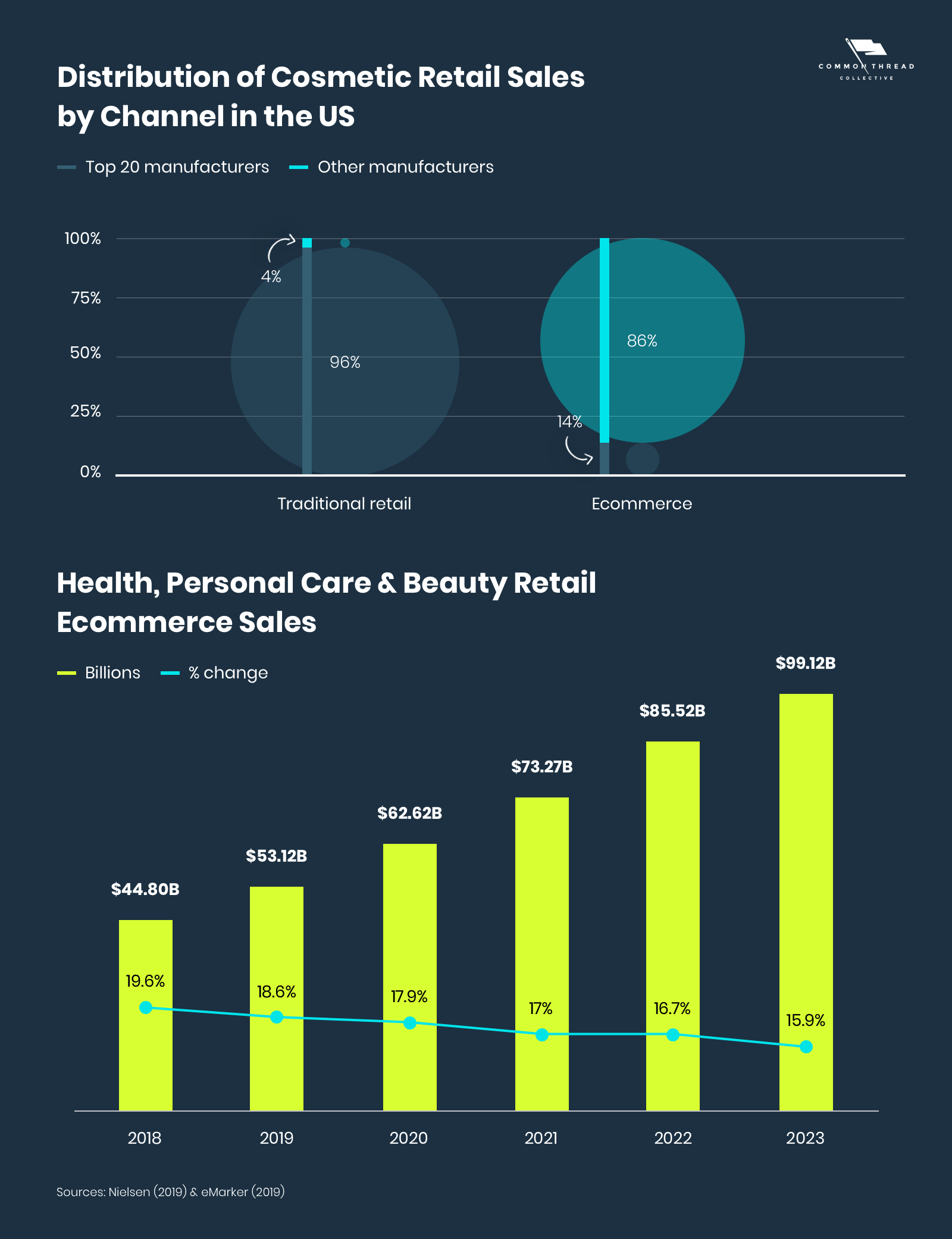
Although ecommerce penetration has just increased slightly in recent years, the online share is predicted to surge to 48% in the U.s. past 2023.
While promising, mass-merchandiser and multi-brand platforms currently have a stranglehold on the market.
But, ecommerce offers something legacy dazzler retailers do not: exclusivity.
The way into the winner's society unites that desire for convenience with quality products. eMarketer reports that buyers who valued quality most were more likely to store straight from a site (64%), while big-box stores won shoppers on toll (28%).
Tired of scrolling? Want to save the report for later or share with your team? Practiced news: You can.
Nosotros've compiled all the data, tactics, and instance studies into a single — and gorgeous — PDF. No strings attached …
Trends: Insight from 2022's Top Cosmetics Brands & Companies
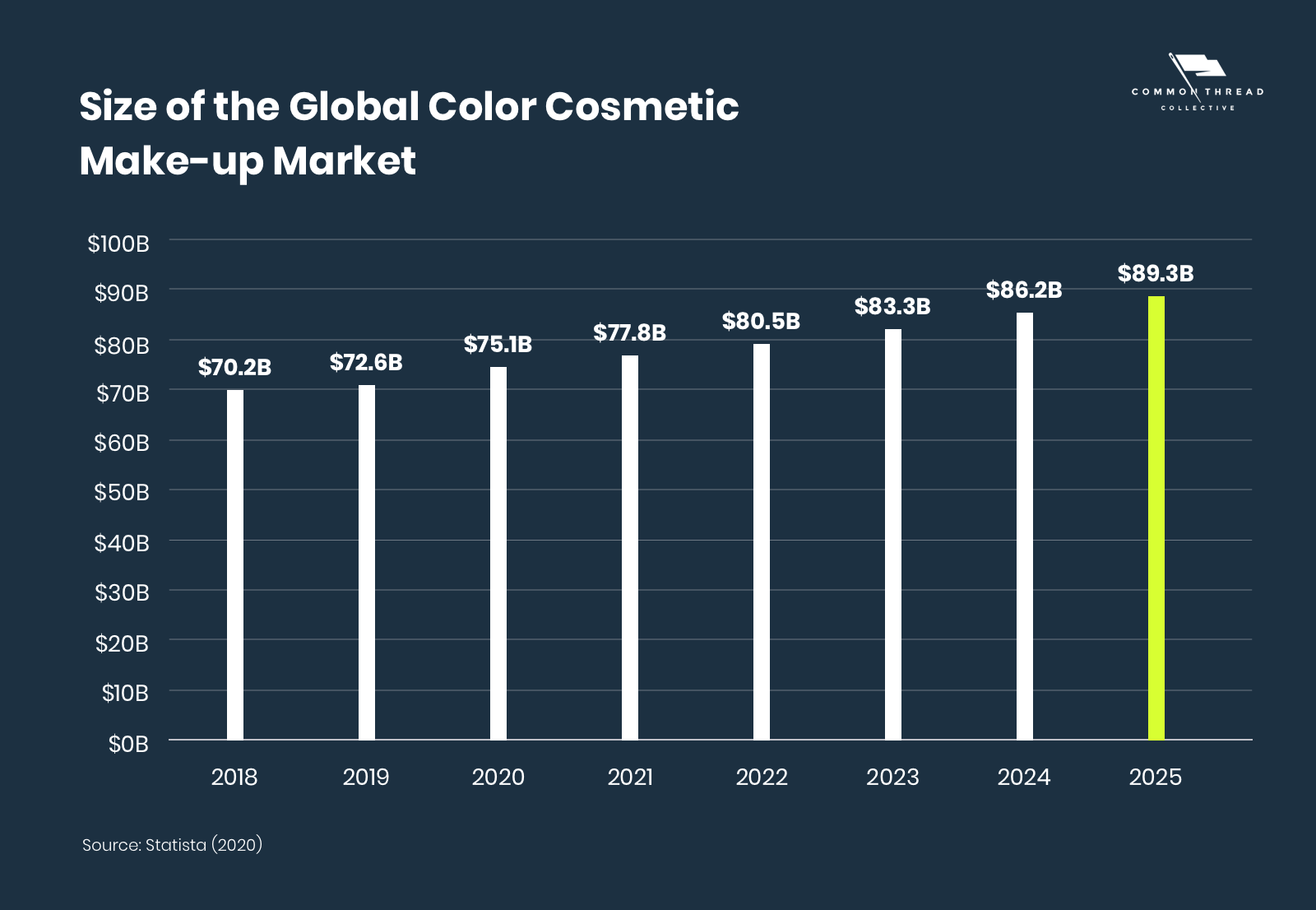
Each vertical can exist differentiated further, both by distribution channel and brand. Color cosmetics occupy a unique segment as they're available in a broad range of locations — from luxury spas, salons, and section stores to home-telly shopping, drugstores, and drome vending machines.
According to a survey from Pymnts, the nearly important factor influencing consumer behavior — beyond price or location — were special sales, unique products, and rewards programs.
Much like ecommerce fashion and even the online pet industry, brands can lean into these digital marketing strategies with the exclusivity of the online shopping experience to challenge the upper-hand of in-store retailers.
Beyond channels, at that place's another divisive trend — natural and sustainable products versus disbelieve and mass produced.
Because of rising incomes, consumers increasingly consider effectiveness and ingredients over price. As a result, positioning now focuses on demonstrating quality through client reviews and UGC too as sustainability through conception.
To win in the fight over product superiority comes from the marketing utilise of iii trivial words: natural, organic, or clean.
But, "clean dazzler" and "organic makeup" are more than just buzzwords. The global value for natural cosmetics is expected to reach $54.v billion by 2027.
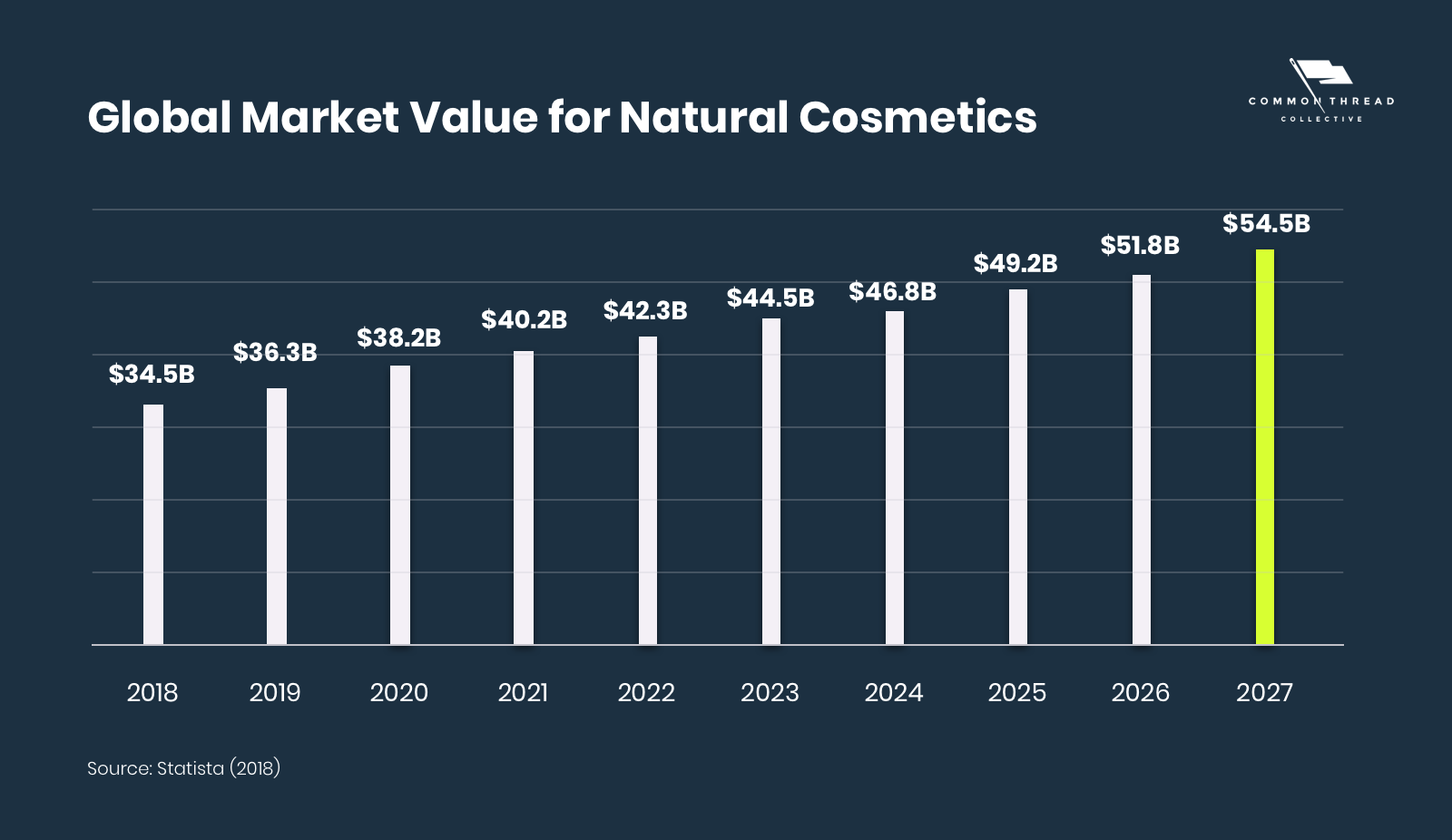
The partition lies within the definition. To be considered natural, the product must meet not-toxic standards for ingredients and processing.
Since in that location isn't strict regulation, insecurity permeates over what actually constitutes "natural."
Upstarts that want to boss the competitive arena should look to build an accurate and sustainable model.
Every bit consumers become increasingly wary of potential toxicity, condom and fragrance-costless products made using natural ingredients and essential oils are likely to record potent growth in the futurity.
Beauty Products by Market Share and Growth: Skin Care, Hair Intendance, Brand-Up & Perfumes
Across production categories, skincare made upward 40% of the global cosmetic market place in 2019.
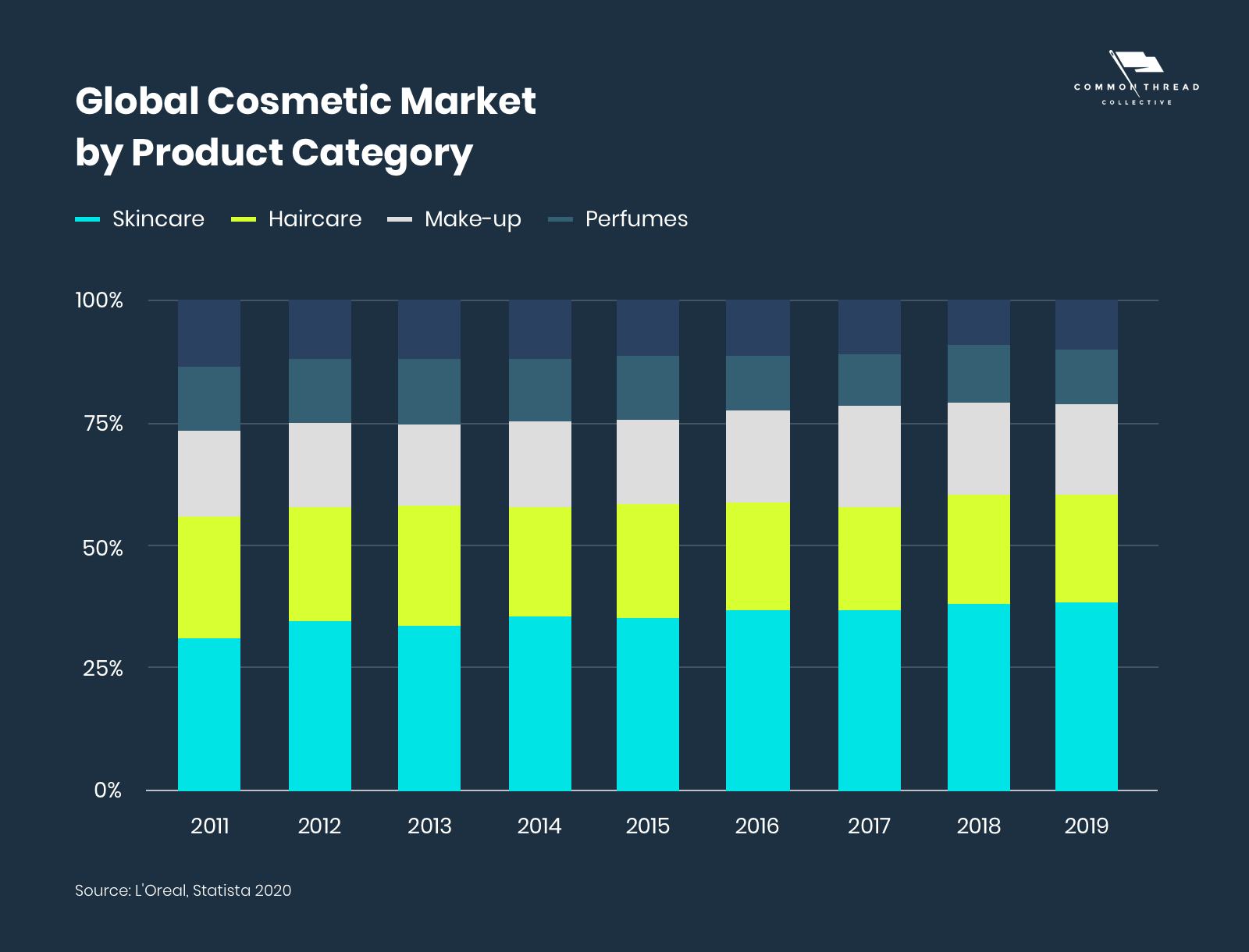
Information technology follows that this trend will proceed as consumers become more educated well-nigh sun damage — indicating potential for growth inside the subcategories of sun protection and anti-aging skincare products.
In the same vein, brands that meet consumer'south new demands and expectation levels of quality will feel growth.
Demographics & Customer Experience
Every bit non-western countries climb in purchasing ability, their influence on demographics follow. With ethnicity, civilisation, and rituals different from North America and Europe, diversity shapes the globe in its image.
Variety is now the norm.
"It's not enough to make fifty shades of foundation and simply sell the night ones online," said influencer Jackia Aina in an interview last year. "I've directly seen how the consumers accept demanded better and fairer retail shopping experiences for everyone … we've seen a big rise in brands expanding on their products."
Ethnicity isn't the merely driver, age plays a critical function in how consumers shop for personal intendance products.
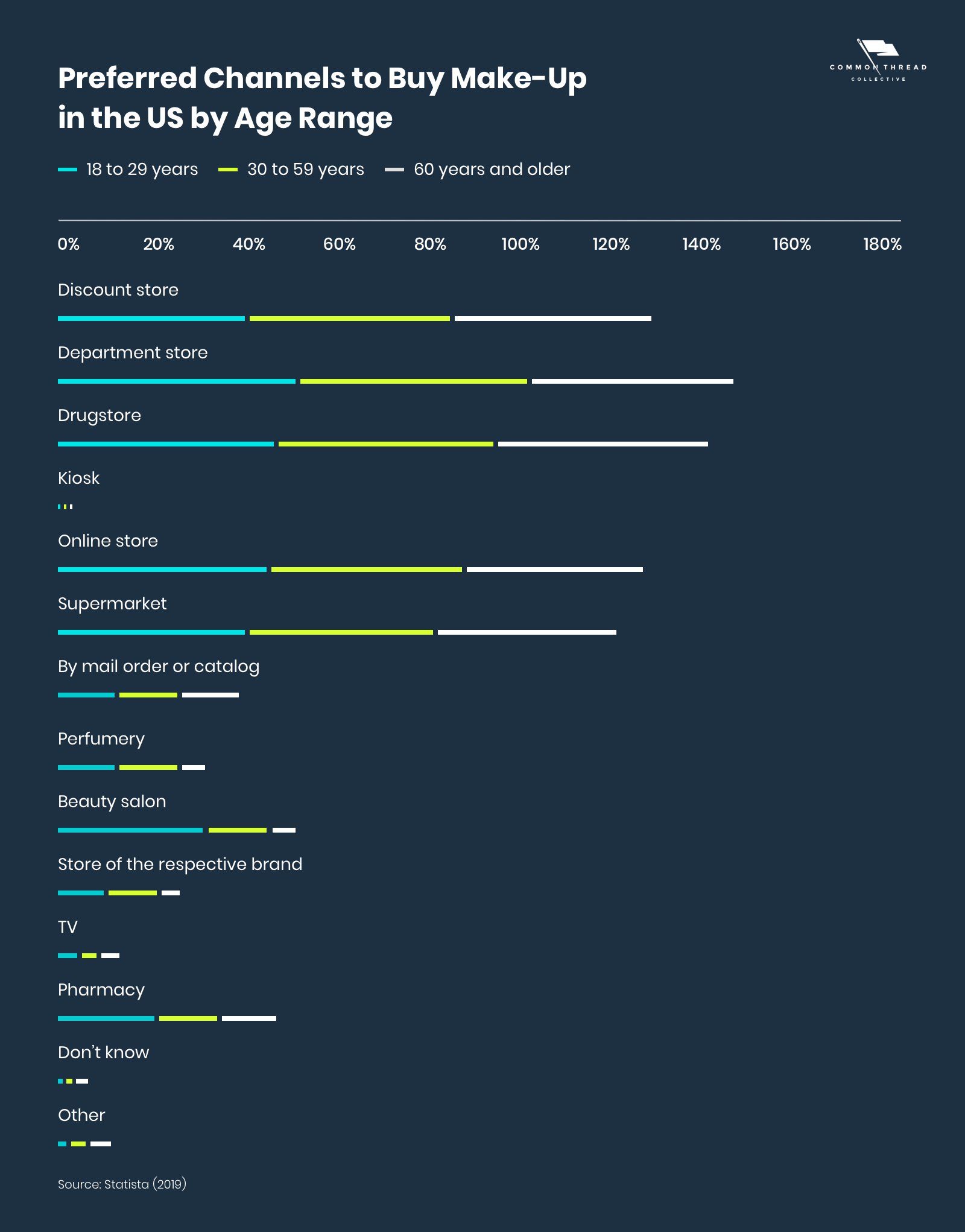
As a result of inbound the chore market, Millennials and Gen Z have get the biggest drivers of new business organisation. This is especially glaring in the US, where they take to a higher place-average expenditures on personal care products — an index of 122 on cosmetic products — compared to other shoppers.
Of the leading brand-upward purchase criteria according to women in the US — the importance of quality, value, and the brand remained relatively like across all age-groups.
Among Millennials, in item, were significant differences.
They more than doubled their baby boomer counterparts in regard to preference for organic or eco-friendliness.
Fifty-fifty more hit, 29% of them make purchasing decisions based on media or online reviews — 3x greater than that of Gen 10'ers and a whopping 6x more than Babe Boomers.

This sets the phase for social proof every bit the key to unlock Millennials' loyalty and trust. Socially and digitally native brands are in a prime number position to capture that need.
Which, of grade, brings united states of america to …
Amazon & Walmart
Amazon's success in yet some other CPG category is no surprise. Co-ordinate to Edison Trends information, health and beauty is the third-most-purchased category — bookkeeping for 44.iii% of total online sales in the US.
Consumers cite the convenience of Amazon's website, easy navigation, and service as the main reasons they choose Amazon over Walmart.
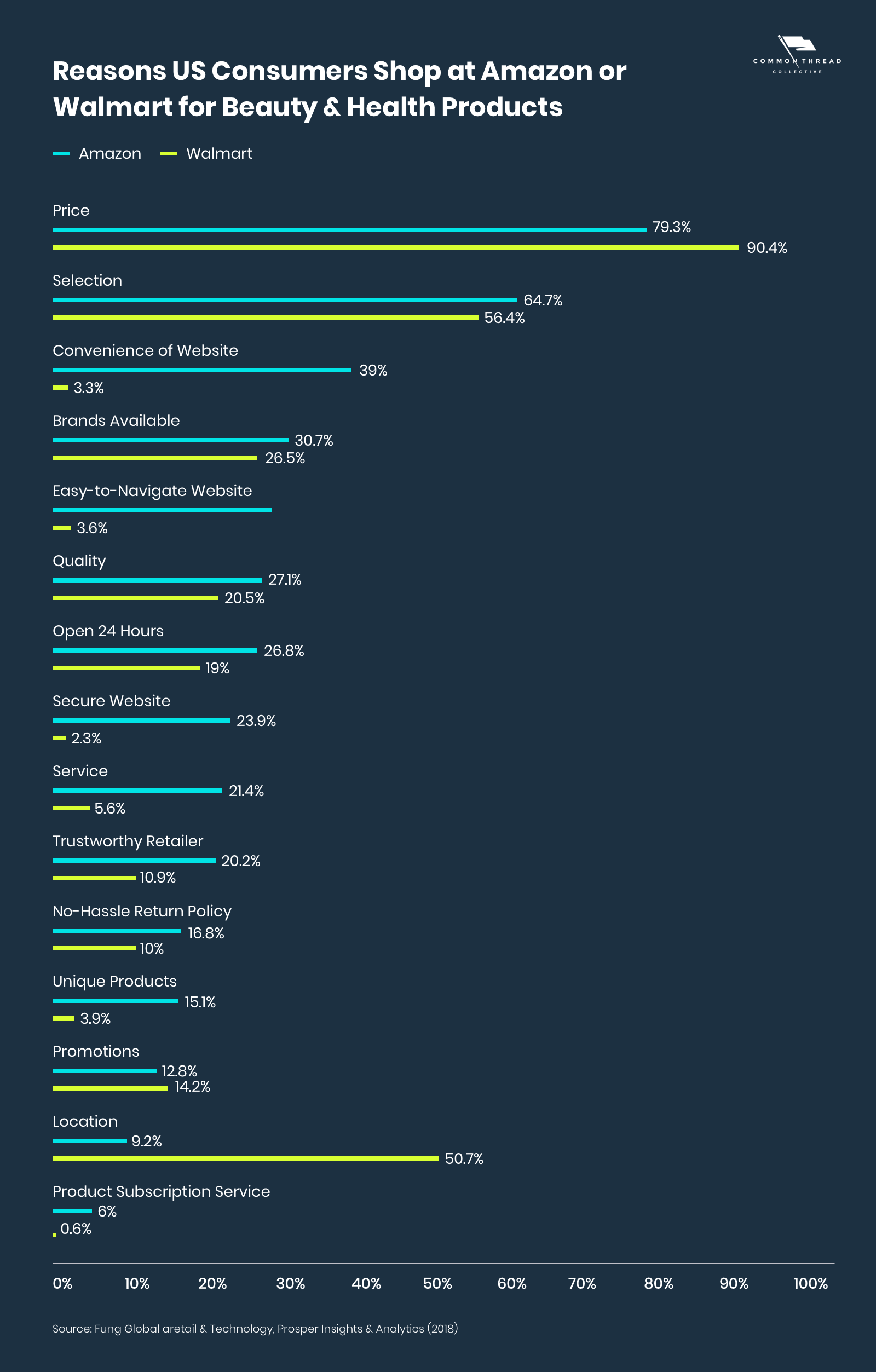
This is likewise bolstered by its Prime number membership plan. According to eMarketer, 52.5% of Prime members bought beauty products in the by 12 months vs. 16.9% of nonmembers.
Although Amazon's growing, shoppers still prefer other channels. Ulta has far college ecommerce sales ($618.8 billion) and just x.1% comes from digital channels.
Information technology's a glimmer of hope for beauty retailers not selling on the platform, that Amazon isn't always the end-all-be-all.
2022's Acme Beauty Companies & Cosmetics Brands, Plus Five Trends
Legacy: Peak 10
Leading for more a century, legacy brands dominate on a global calibration.
Since 81% of all US consumers shop in-stores, their longstanding product placements in brick-and-mortar and drugstore chains are particularly lucrative.
Meet, the former guard:

And even so, loyalty has waned. Call it karma — legacy retailers who preached youth equals beautiful are now beingness pushed out past younger make counterparts …
Direct-to-Consumer: Top 25
The old guard of makeup brands — like 50'Oréal, Estée Lauder, and Chanel — though revered for their acquirement and legacy, aren't revered by all.
As a new generation of consumers grows upwardly, they're more empowered to purchase "quick-to-marketplace" products establish via social media from brands that are growing right alongside them.
Enter, the new baby-sit courtesy of 2PM Inc.'due south DTC Ability Listing:
- IPSY
- Fenty
- Morphe
- Kylie Cosmetics
- Glossier
- Curology
- Ouia
- Function of Dazzler
- Vanity Planet
- Drunk Elephant
- Tula
- MILK Makeup
- Prose Hair
- Supergoop!
- True Botanicals
- The Honest Visitor
- Frank Torso
- Oui the People
- Kopari
- Topicals
- Goop
- Volition
- Blume
- Birchbox
- Alleyoop
The rise of social shopping coupled with more consumer packaged goods offerings online, lends itself to new ecommerce penetration opportunities for DTC brands.
What's more, dazzler products make up the second-largest product category for appointment across Instagram, Twitter, and Facebook.
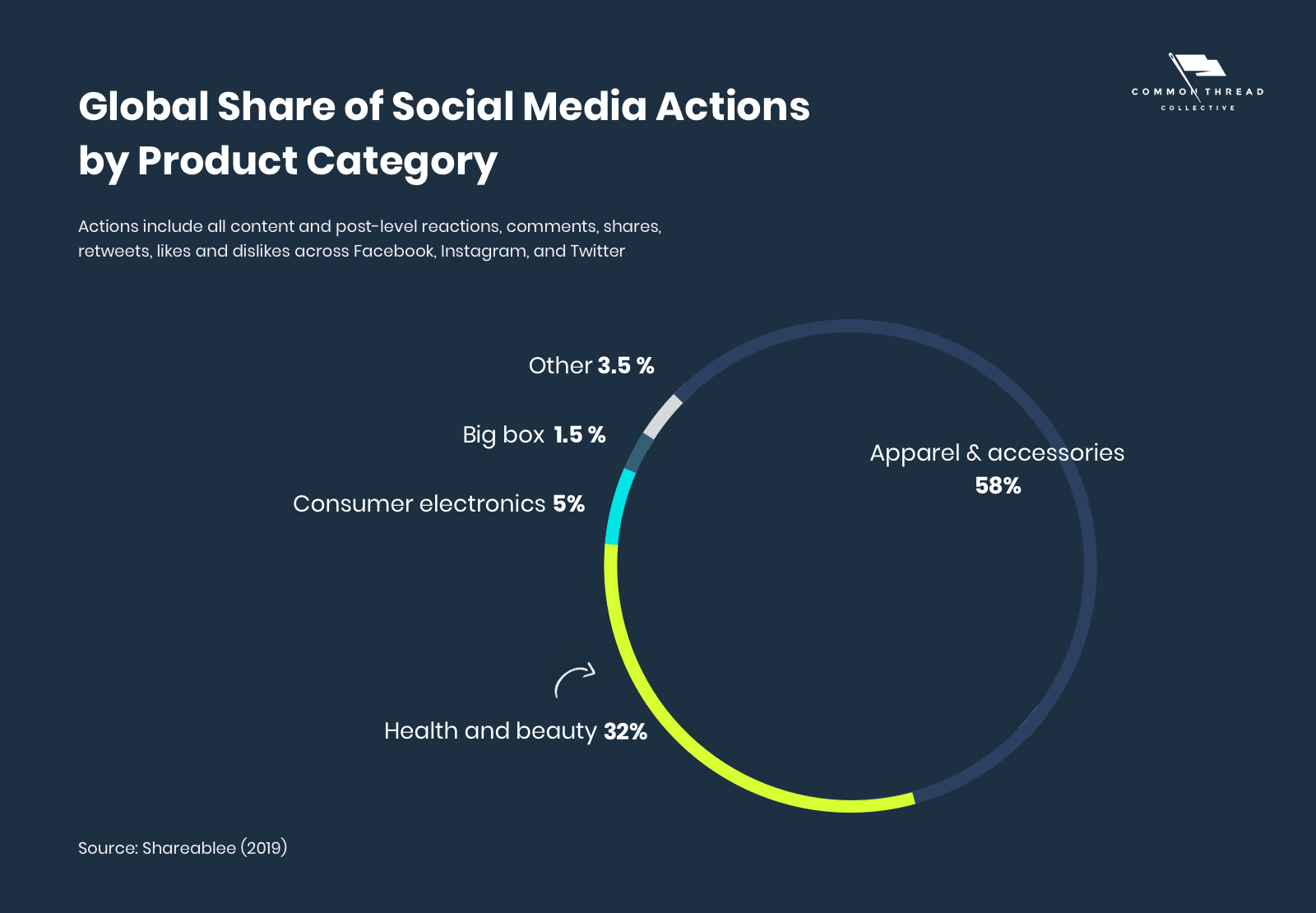
"It'south non just the billion-dollar brands similar Kylie and Glossier," said Andrew Lipsman, eMarketer chief annotator. "There's a whole cottage manufacture of emerging direct-to-consumer brands that are leveraging targeted social ads and influencer marketing to accelerate growth."
As it stands, more than than half of US internet users have already purchased from DTC personal intendance and beauty brands in the past:
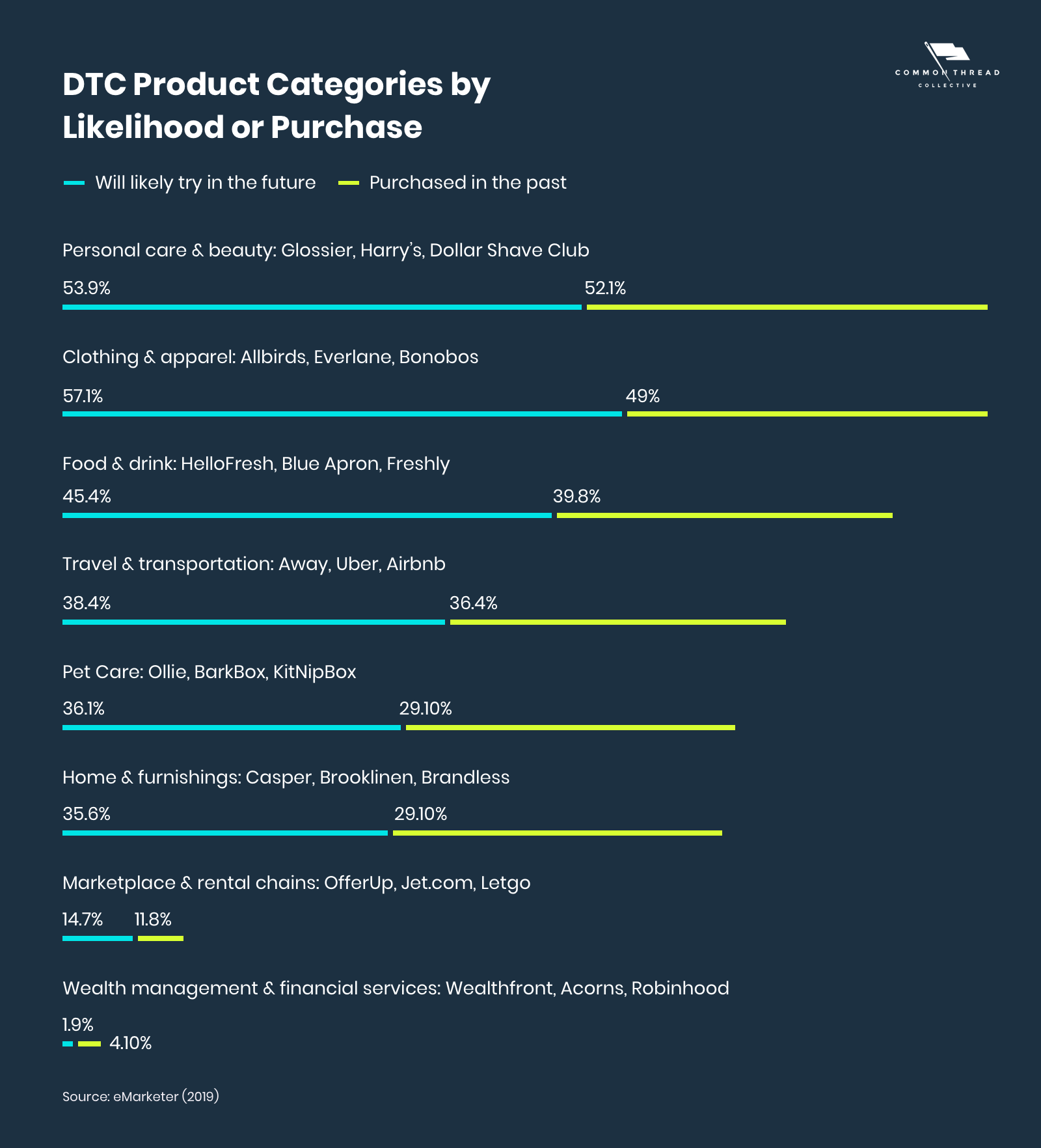
Even more promising, 53.9% said they will probable endeavour new products from DTC'southward going frontwards.
Cosmetic Industry Trends
The DTCs bring new creativity, while the legacies bring wisdom. There's a lesson to exist learned from each …
1. Birchbox & Ipsy: Subscription Services
In the past several years, subscription startups like Birchbox and Ipsy have reached valuations ranging from $500 million to $2 billion — with investors encouraged by the belief that they'd abound quickly because they had a recurring revenue stream.
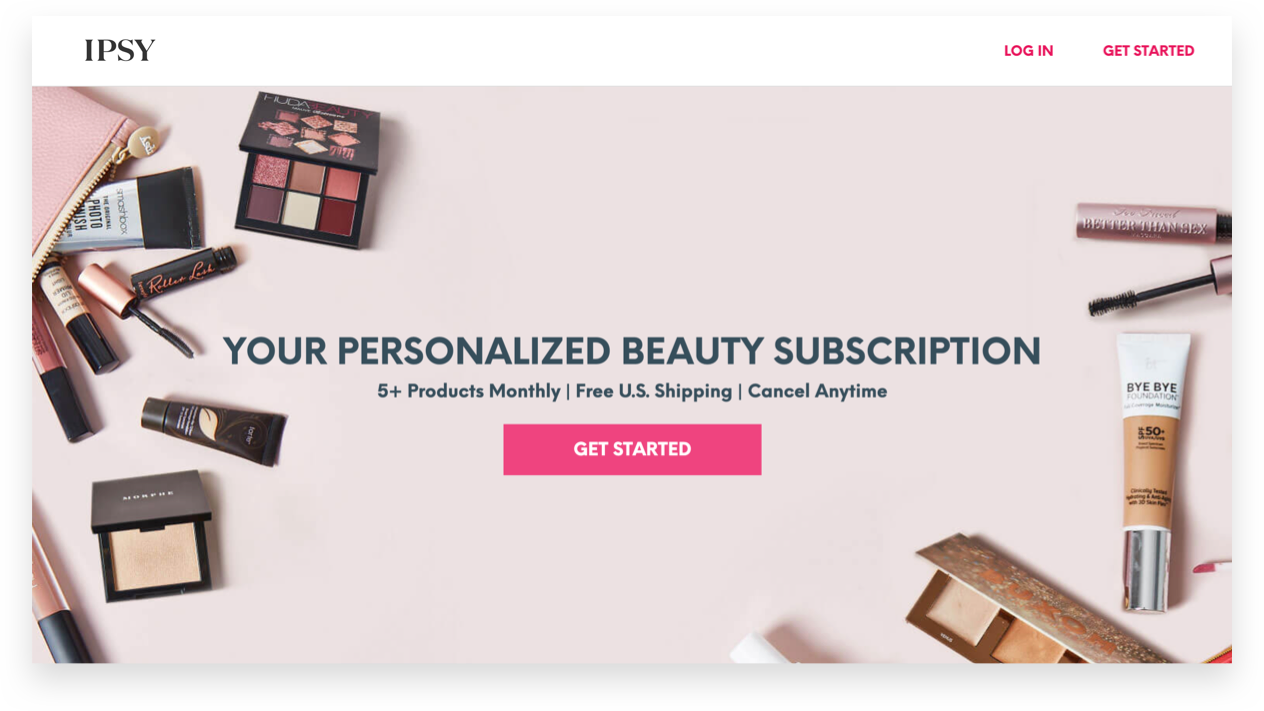
Pioneers of the subscription economic system, Birchbox and Ipsy solved for the problem of product discovery — adding elements of delight and convenience.
Despite a potent offset, by 2018 less than 10% of Usa internet users had received a subscription box in the past month (eMarketer).
It also proved difficult to keep profitable, as many customers would sample products through their subscription boxes, only ultimately purchase the total-sized items from retail giants rather than the startup's site.
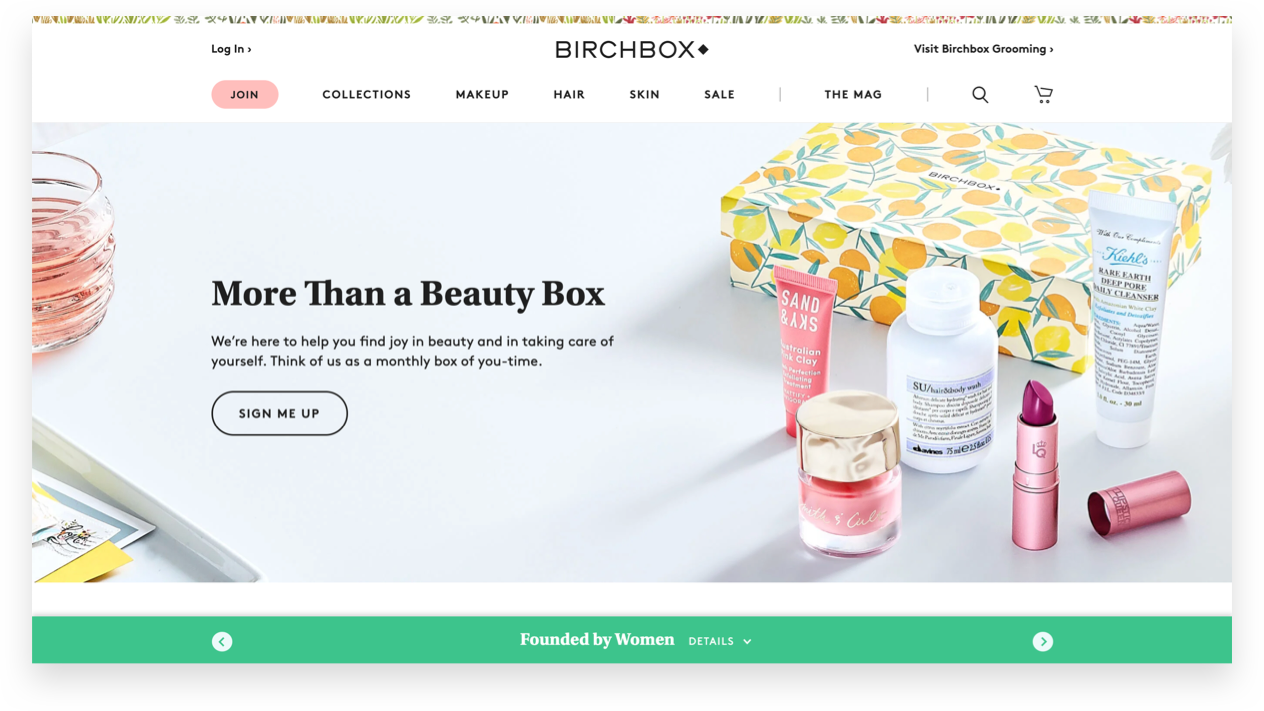
Now, even Birchbox — the purveyor of the subscription model — has turned to a new tactic to meet customers where they're at. Enter, the "pop-up" …
2. Glossier: Pop-Ups
As a DTC brand that rejects the traditional brick-and-mortar model, it follows that Glossier's entry into the retail space rejects the norm.
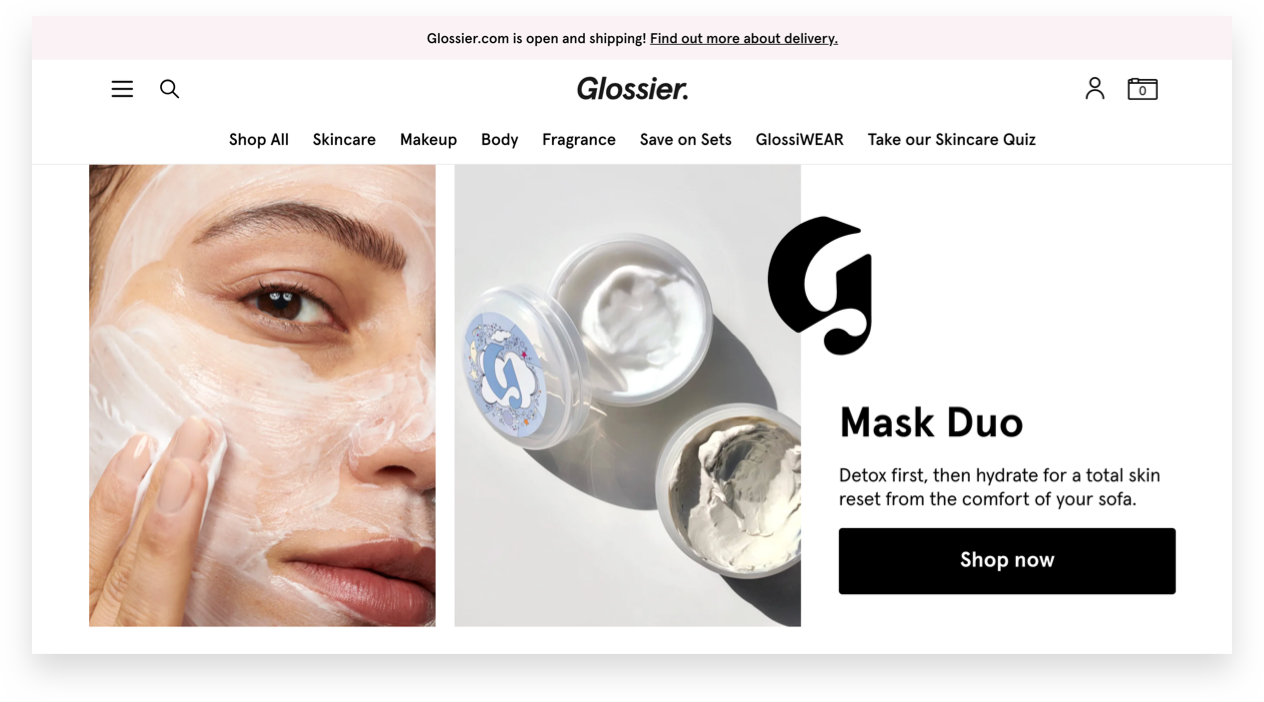
Experience-led and cult-followed, Glossier seasonally opens sectional pop-up stores from Los Angeles to London. Merely, the store experience is anything but typical.
With different themes in each space and experiential marketing activations — it'due south congenital hype that attracts droves of brand enthusiasts eager to endeavour out the products in real-time.
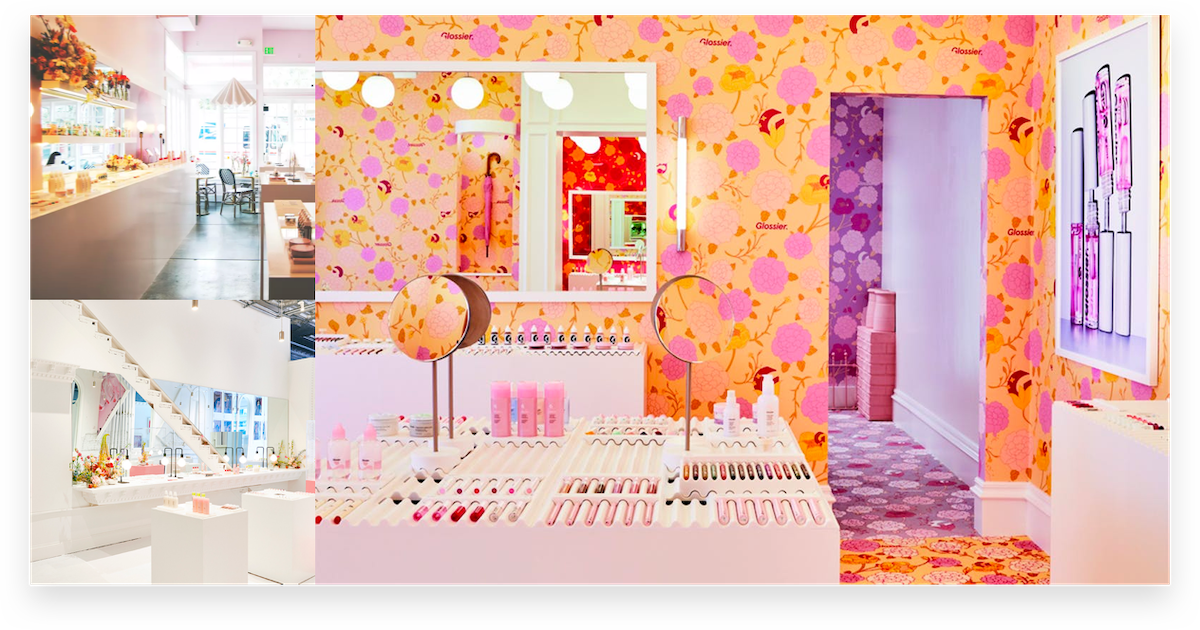
Past engaging with its fans in a contiguous setting, Glossier is able to deepen relationships with customers across online interactions. Yet, it doesn't come up with the financial obligations of following a chain-store model.
Instead, the popular-upwards model allows them to reap the benefits of a physical presence to capture consumer demand without the existent estate costs.
However, brands looking to imitate its model should first exist cognizant of who their own consumer is.
eMarketer reports that 38% of customers interested in checking out pop-upwardly stores are those who already shop online every calendar week compared to 28% who prefer brick-and-mortar shopping.
Thus, the appeal of pop-ups may piece of work best to draw in the digitally inclined shopper, rather than the latter.
3. Fenty by Rihanna: Diversity, Embraced
A product catalog that features foundation in a groundbreaking forty shades. Marketing campaigns highlighting people of color. Authentic social media messaging.
Every slice of Fenty's business strategy is derived from a atypical mission, "Dazzler for all."
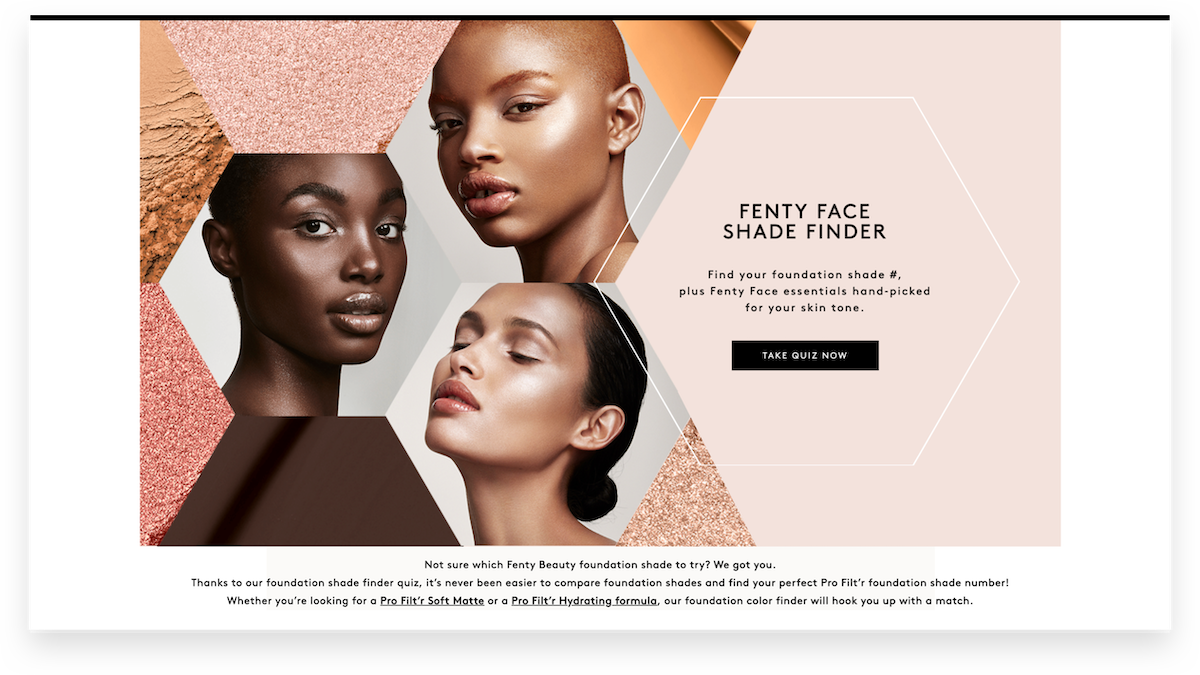
With a lack of diversity in the cosmetic industry, both in representation and product offerings, Fenty was proactive in creating for customers' needs, non reactive.
"I never could accept anticipated the emotional connection that women are having with the products and the brand equally a whole," Rihanna told Time. "Some are finding their shade of foundation for the get-go fourth dimension, getting emotional at the counter. That'due south something I will never go over."
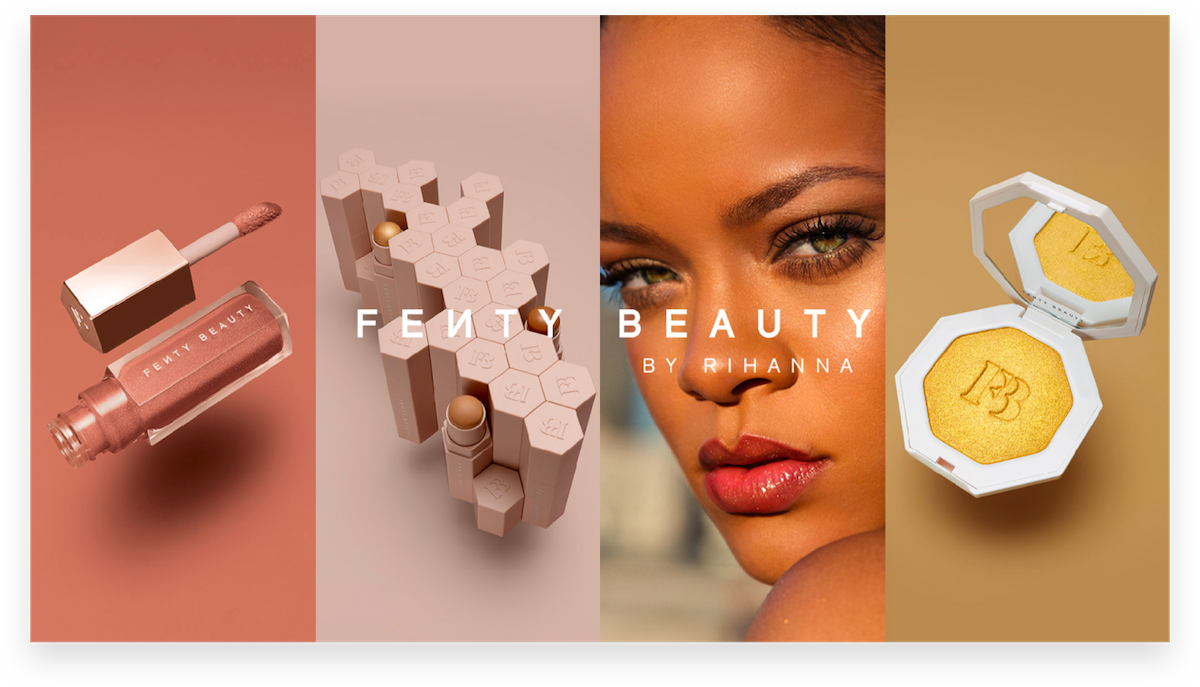
Information technology reflects a sense that what used to be considered niche by archaic advertisers is no longer. Rather, it's a wake-up phone call for marketers that diverseness is critical to the expansion and service of all consumers.
four. Kylie Cosmetics: Influence
Love her or hate her, Kylie Jenner rocketed from reality-TV "cast member" to total-fledge entrepreneur over the last 5 years.
Reaping the benefits of hundreds of millions followers on her personal social channels combined with the business accounts, her success is a testament to the ability of influencers on social media.
"It's the power of social media," Jenner told Forbes. "I had such a strong accomplish before I was able to first anything."
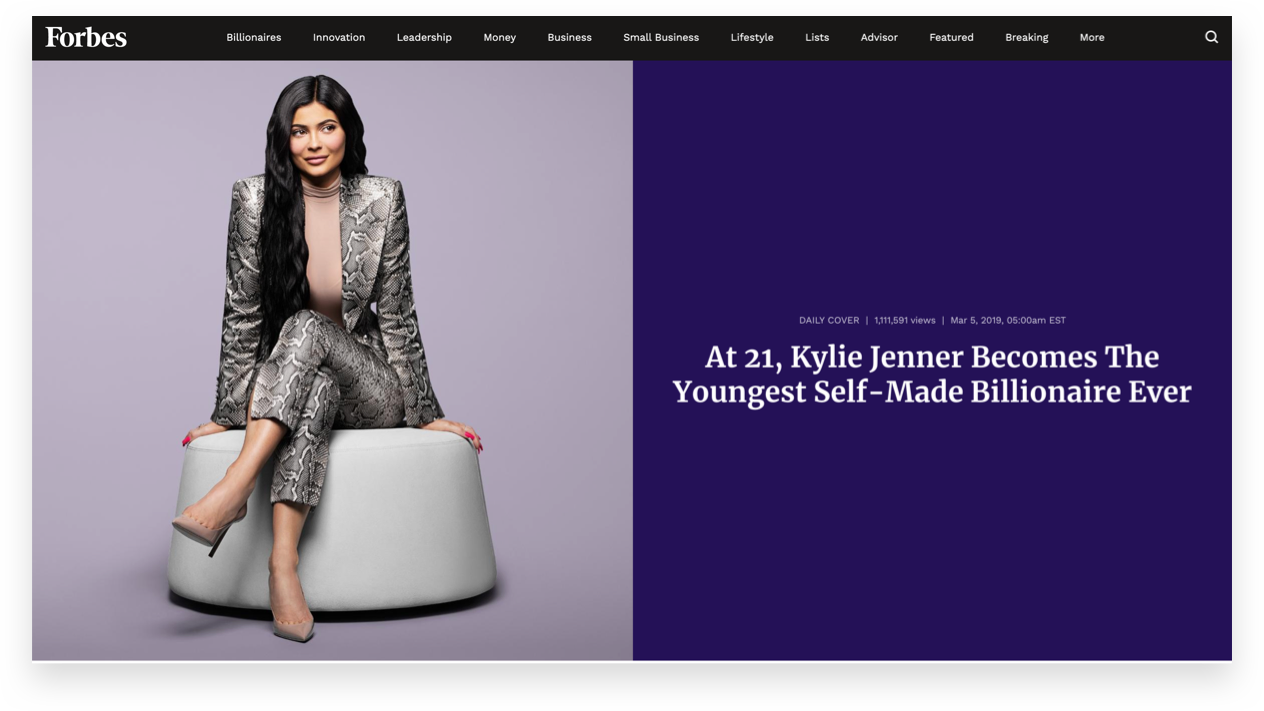
Kylie was nurturing her social audition long earlier she e'er asked them for the sale. Past posting YouTube videos of her makeup routines and sharing looks on her Snapchat stories, she had positioned herself as a leading voice.

So, when the Kylie line launched, the lip-kits sold out in less than a minute. Her followers didn't need whatever convincing. They were sold on the production because they were sold on her.
5. L'Oreal: Forwards, not Backwards
More than than a century former and a household name throughout its lifetime, 50'Oreal is the leader in sales worldwide.
Keeping the pb among decades of revolution has required that L'Oreal doesn't look dorsum and revel in its status. Rather, they must constantly adapt the model to progress forrard and keep up with DTC disruptors.
L'Oreal's strategy: get out of the onetime (legacy) by integrating the new (technology). Its emphasis is on pioneering new technologies like AR, VR, and AI to bolster product discovery. They've fifty-fifty coined the shift to digital marketing strategies, "Marketing 3.0."
Marketers worldwide quickly followed L'Oreal'southward lead, with 65% expecting AI-powered chat campaigns to be adopted at-scale by 2020.
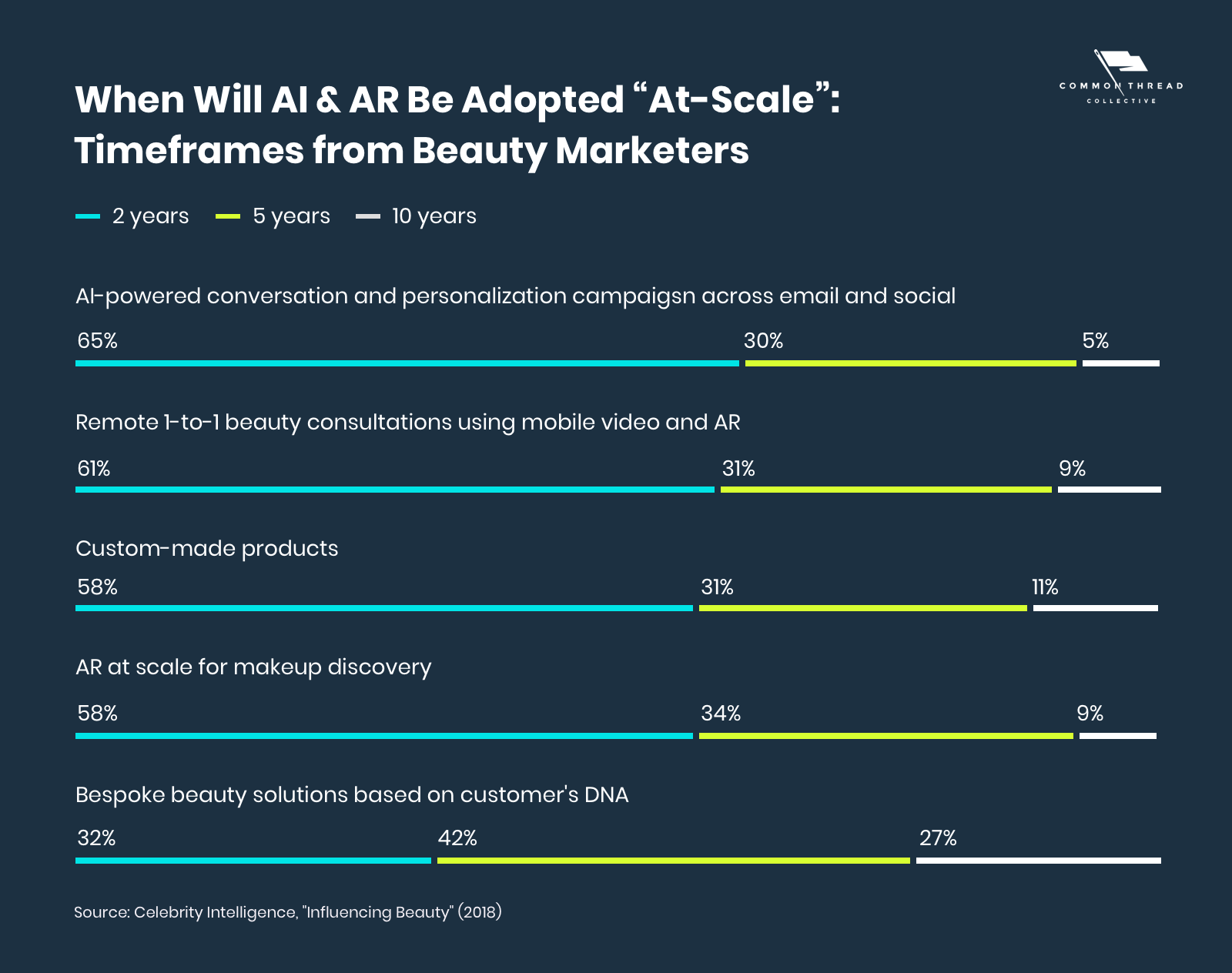
"The game won't be the same when yous merely ask your vocalisation assistant to buy the best mascara for yous. Or if you are able to scout a makeup tutorial directly on your face with a virtual endeavor-on," said Lubomira Rochet, Fifty'Oréal's global chief digital officer in a Think with Google interview.
"The brands that master these experiences will be the ones people choose."
Strategies: Your Ecommerce Marketing Growth Plan 'Make Over'
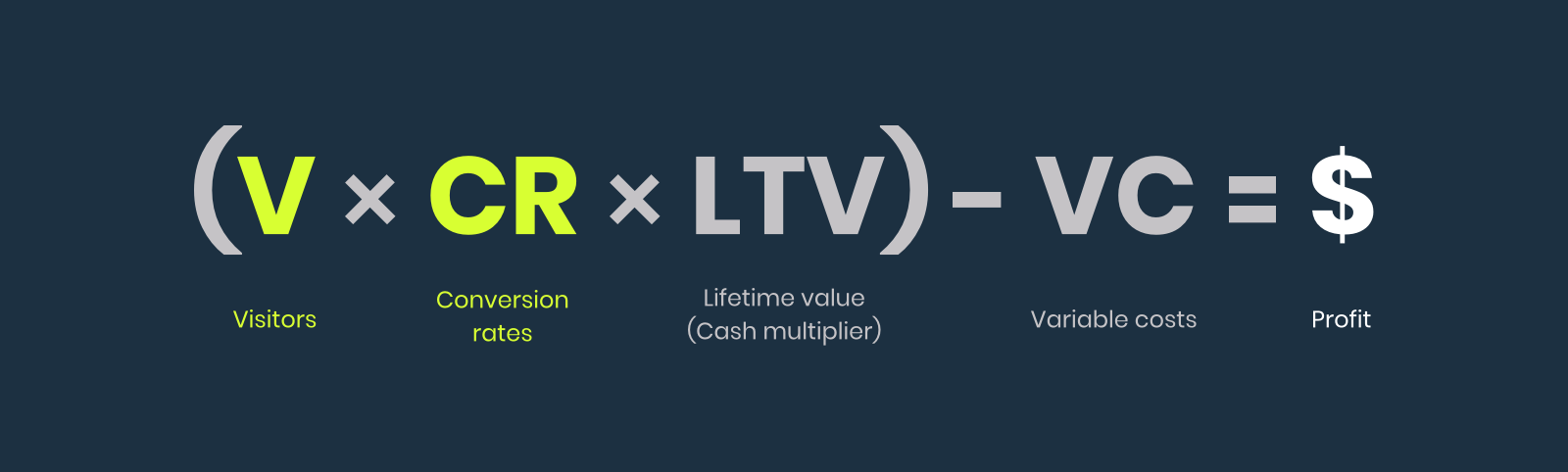
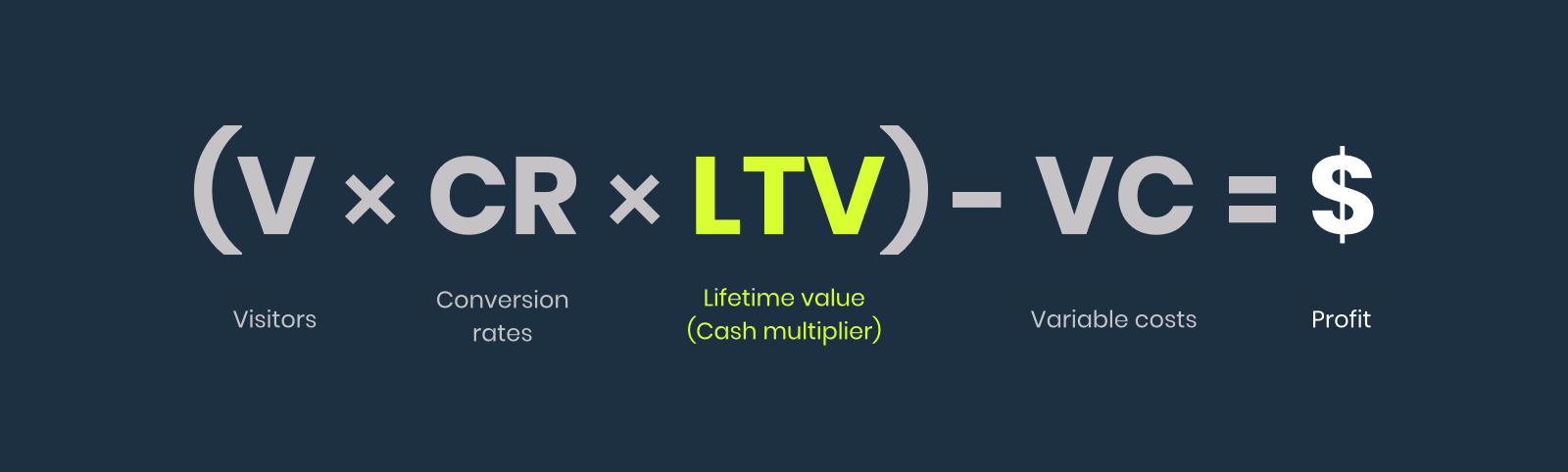
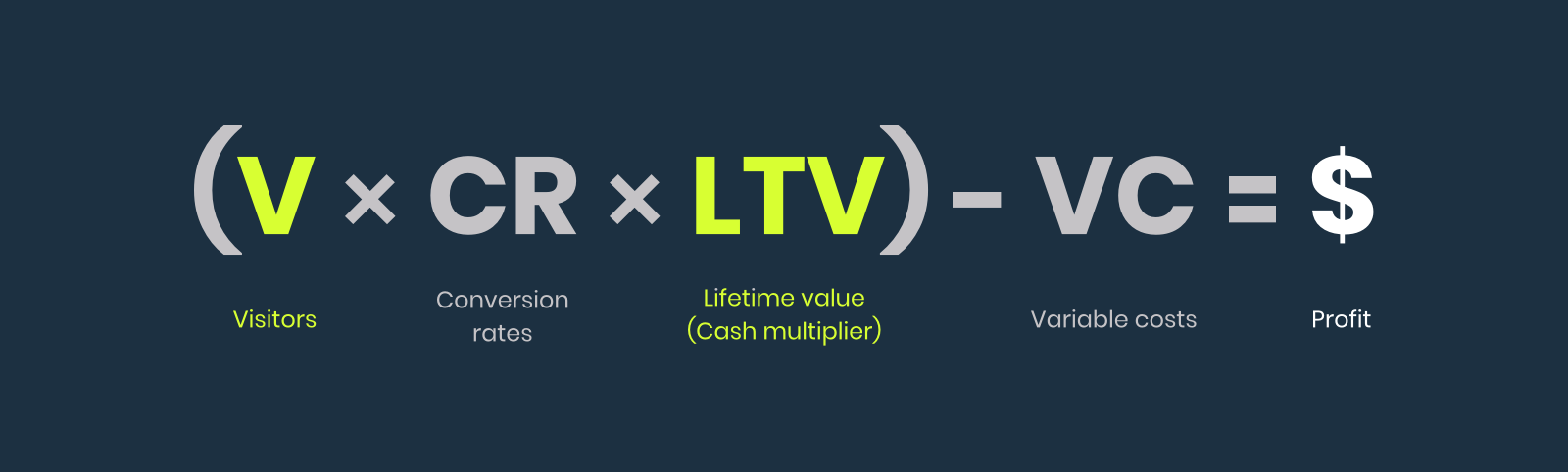
When growing a cosmetics brand from the footing up, only four metrics matter: visitors, conversion rate, lifetime value, and variable costs.
We phone call it the …
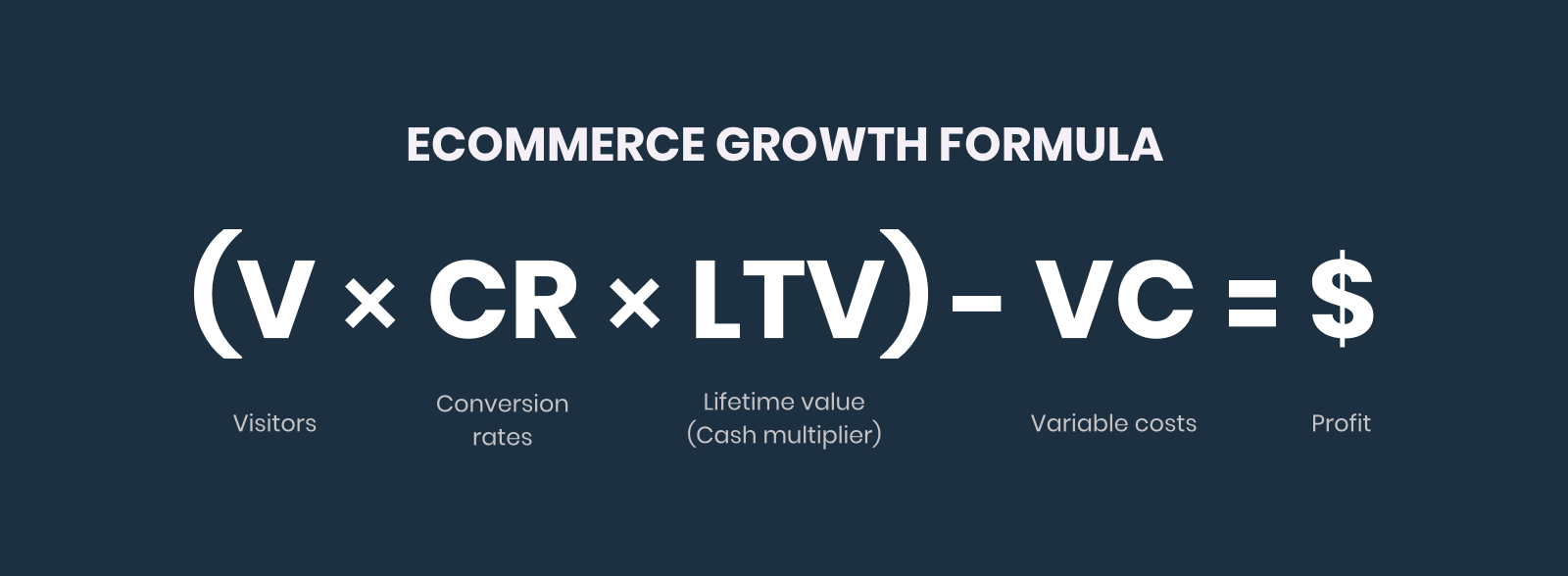
There's no other way to increase your profitability than to bear upon 1 of these four variables — driving them forward through a strategy built for growth.
Visitors: Driving Traffic
Drive new and returning customers (your target audience) to your online store across every distribution channel available.
Social Media Advertising
Glossier named it the main reason for its success. Rihanna exclusively launched her make on information technology. Social media marketing beyond Instagram, Facebook, and Twitter is the honey pot for modernistic beauty brands.
The numbers follow the trend:
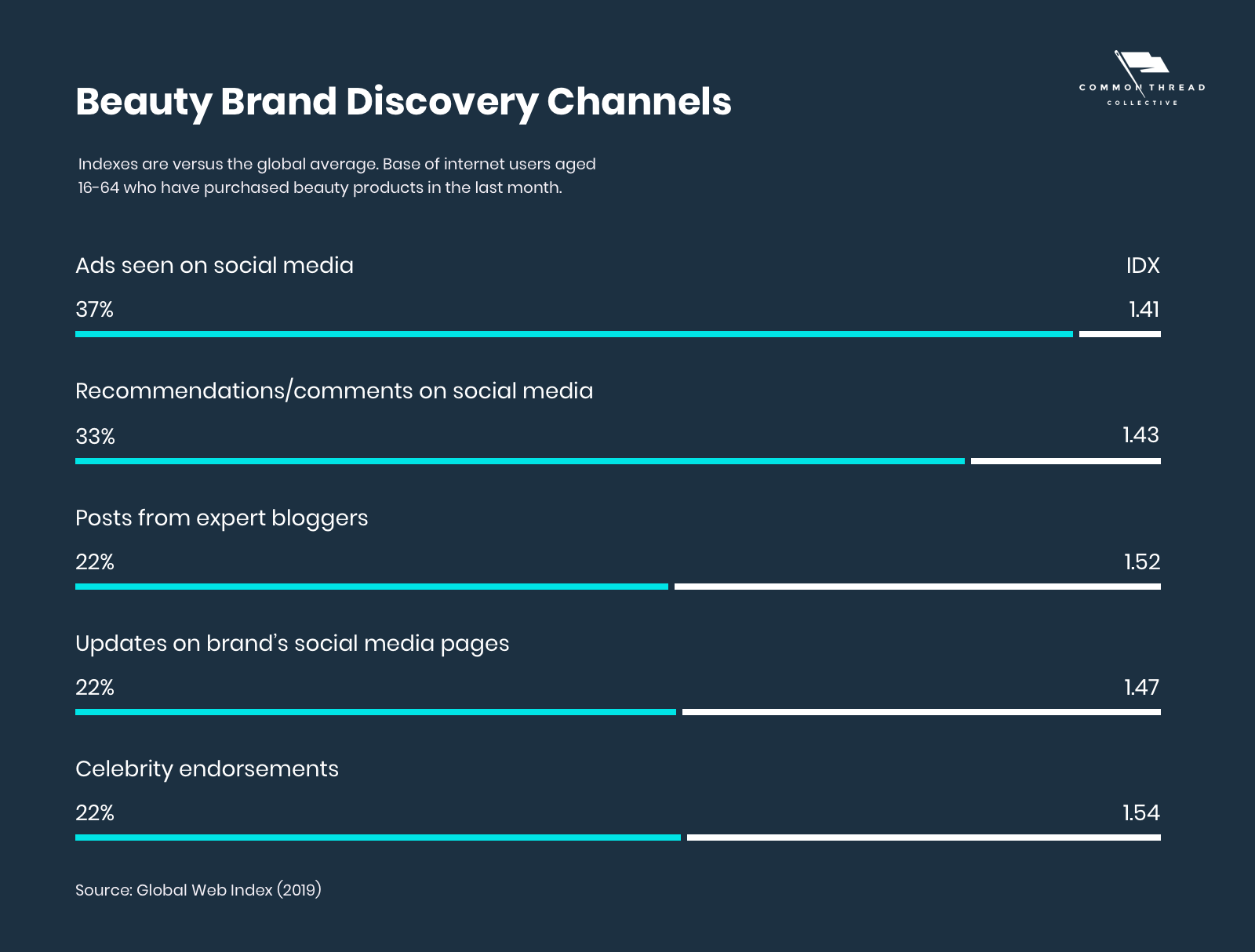
Begin past determining what makes your product visually intriguing. Then, exam that out in your advertising creatives.
"When selling a product similar a moisturizer, showing an awarding photo isn't that interesting," says Vincent Wu of Bambu Earth.
"Instead, we started shooting photos of the jar angled onto the top of the product. We messed with the product textures, lighting, props — and have constitute ad success with it considering of the unique artistic brandish."
After using the correct side of your encephalon, don't forget well-nigh the left — develop a social media buying strategy. Showtime by calculating your numbers by examining customer cohorts:
- What are people doing post-purchase?
- Are they coming back?
- If so, how many and how long does it have?
Then, utilize this data to come up with a spend strategy that aligns with your cash flow and goals.
Influencers
The advantage cosmetic brands have compared to other industries, is that influencers can showcase results in existent-time.
What used to be walking through malls with associates applying makeup samples for complimentary, is at present replaced by bloggers doing live social media tutorials that demonstrate the results and what they like well-nigh it.
Information technology'south like shooting fish in a barrel to fake affinity for the production or make through a still prototype or written copy. By having the influencers create video content — the actuality, or lack thereof, will be clearly seen.
The numbers back it up. With a majority of beauty content consumed coming directly from influencers instead of brands, it's indicative that building trust through social-proof can bear upon buying behavior.
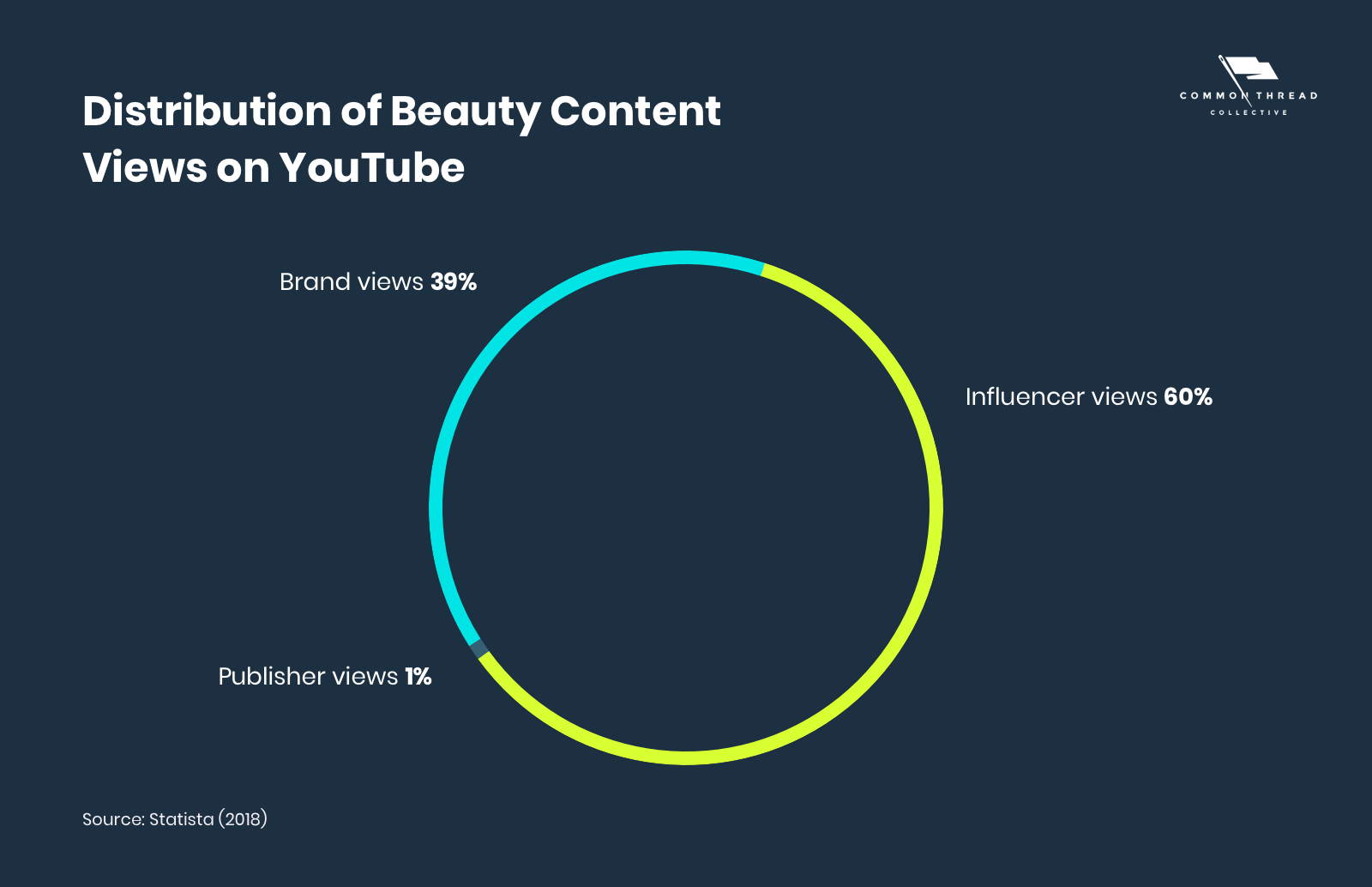
"Create TikTok and YouTube tutorials that show usage and results," says Cody Wittick of Kynship, an influencer marketing agency. "Include testimonials, such as 'this production made me feel [blank]' or 'I loved this virtually information technology.'"
"Unboxing videos often gets overlooked," says Wittick. "Fabfitfun created a stir about this, even so it's a tactic that yet gets neglected."
Create a neat kickoff impression with the influencer by sending something special to them. If you don't have the budget, write a handwritten note. Personalizing the experience will increase affinity and the resulting content will reflect that genuineness.
Search Engine Marketing (SEM)
Google Shopping for ecommerce e'er was and will continue to be the most of import campaign type you can leverage.
Within Google Shopping, the biggest focus must exist data feed management.
As opposed to normal search campaigns, Google Shopping campaigns do not utilize specific keyword targeting. Instead, ads are targeted using the data in your client feed. Google has a long listing of specifications that explains which data they need and in which format they need it in.
While there'due south plenty of data you can send Google in a feed, not all fields are created equal. Certain optimizations will take more of an impact than others, with product title being the virtually important.
"We like to get as much information into the product title as possible within the 150 character limit," said Mutual Thread Commonage's Director of Paid Search, Tony Chopp. "And typically we like to follow some sort of structure to keep things consistent, for instance:
- Brand + Product Type + Color + Cloth
- Make + Size (length, width, height) + Product Type + Color
- Material + Product Type + Color + Brand
- Style + Color + Product Type + Brand
- Product Type + Size + Colour + Feature + Brand
Recall about how you lot can get potential non-brand search keywords into your products. And mind the order. Google places more weight on words at the start of the title than those towards the finish.
Search Engine Optimization (SEO)
When combining organic with paid marketing campaigns, the potential for growth skyrockets. Still, revere endemic media channels to generate returning customer value, not equally your source of new customer acquisition.
Build personalized email flows. Create useful blog content. Cherish your organic audition and reward them for continually choosing to engage with you.
YouTube
The leading content category among women and a fanbase of millions – beauty has taken YouTube past storm.
From skincare tutorials to shopping "hauls," the platform is ripe for both entertaining and disarming new buyers.
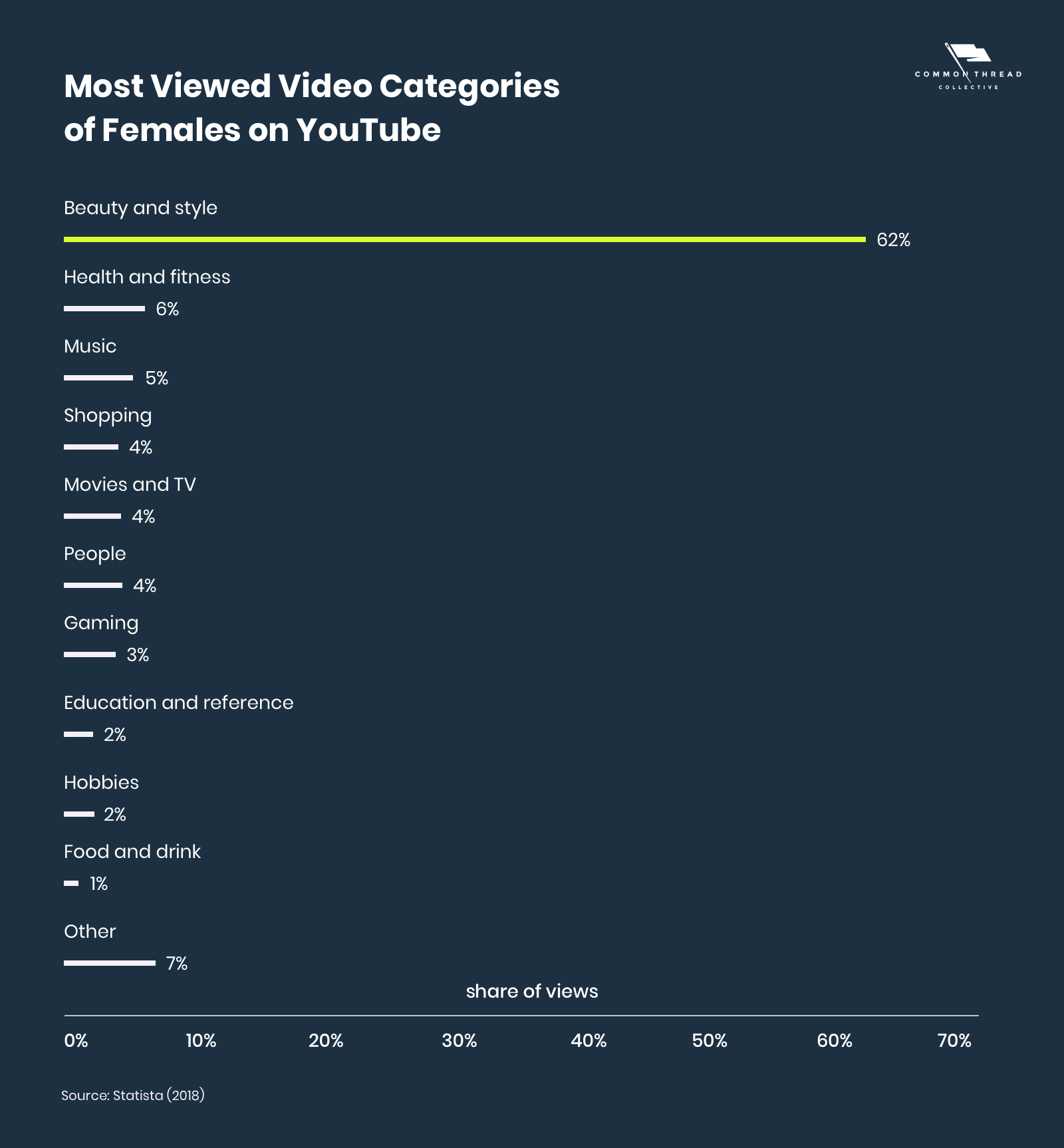
The best office? Legacy brands aren't dominating.
Their content makes up 3% of total views, while individual "vloggers" control a stunning 97% (DigitalSurgeons).
Startups looking to capitalize on the massive space must utilise the power of influencer marketing.
One of the near famous faces on both YouTube and in the industry is Jeffree Star. The vlogger has congenital such a frenzy around his personal make, that following the launch of his own make-upwardly drove, the hosting Shopify site went downwards within minutes of start due to extremely loftier shopping volumes.
Yous guys CRASHED the site! Shane's in a ball crying on the flooring. Working on getting everything support!!! #shanedawsonxjeffreestar
— Jeffree Star (@JeffreeStar) November 1, 2019
The recipe for his content success: immersive tutorials that build excitement effectually a product to ultimately sell and make money. Star even managed to make the list of the highest-earning YouTube stars in 2019 across all content categories, with estimated annual earnings of xviii 1000000 U.s.a. dollars.
His influence, among other YouTube stars, is a testament to the mode that consumer ownership behavior is changing significantly and likely for the foreseeable future.
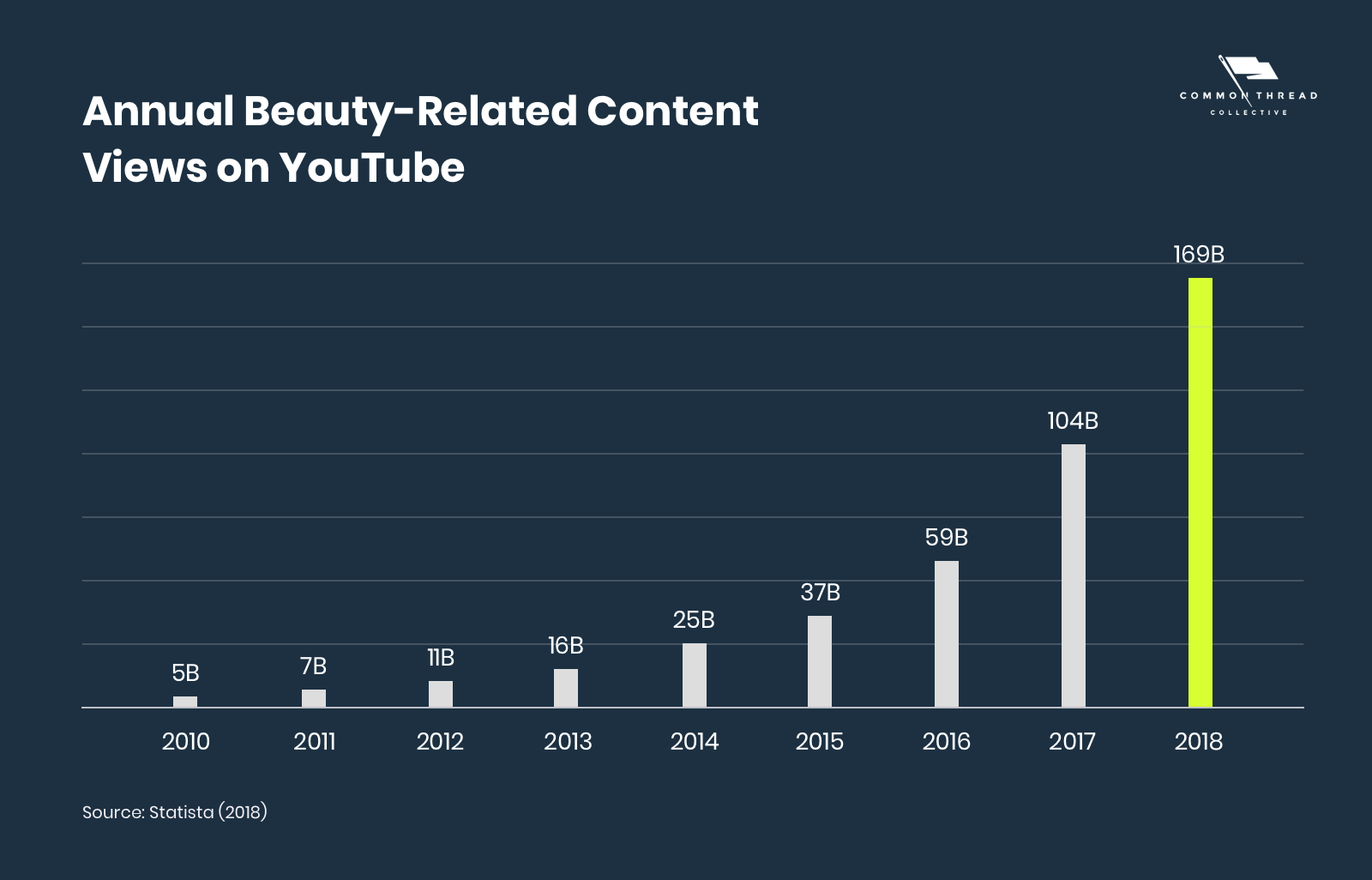
Equally a event, YouTube campaigns offer affordable awareness and assisting conversions.
Still, it's worth considering how you measure the success of your YouTube campaigns. Typical attribution setups in Google Ads do not directly written report on view-through conversions, but you can analyze them by looking at the "All Conversion" reporting columns.
"We often measure YouTube (and Display) differently than traditional search and shopping campaigns, by at to the lowest degree considering a ane-day view through window," recommends Chopp.
Conversion Charge per unit
Learn new customers and increase AOV past optimizing your onsite experience.
From driving visitors through ads to the design experience, conversion rate encompasses the culmination of digital marketing efforts within your sales funnels to finalize a buy.
Tactics to increase conversion charge per unit include email capture, reviews, trust seals, user-generated content, subscriptions, and in-cart or mail service-purchase upsells. This combined with site speed and mobile optimization allows for a seamless shopping experience.
Customer Lifetime Value
To build your business concern over the long term, the nigh important and oft disregarded metric is your customer lifetime value (LTV) or "cash multiplier" (CM). Rather than thinking about your unabridged lifetime of your business, we want to know what your client is worth in a very specific payback menstruum.
Showtime by determining your xxx-, 60-, or xc-day LTV. Then, execute a plan that fits your cash catamenia and builds your business concern over the long term. Tactics like memorable unboxing experiences or content marketing can generate an organic customs of brand evangelists.
E-mail Marketing
Retention, retention, retention.
E-mail marketing is critical to improving your LTV and maximizing revenue.
The practiced news is, nosotros've already laid out the strategy to drive visitors to your site. Use their inflow to your advantage by encouraging subscriptions to your email lists, which will drive purchases further downward the line if they don't convert the first fourth dimension effectually.
Whether your e-mail subscriber is a time to come or past purchaser, mix two parts education and date with one part sales.
Drivers similar loyalty or subscription programs are tactics that build a customs around your brand and lead to upsells further downward the line.
From welcome flows to mail service-buy flows, ensure your messages speak to your brand and provide value to your consumer's stage in the customer journeying.
Variable Costs
If costs increment every bit orders ascension, that's a variable cost (VC).
Opposed to fixed costs — like rent and operational overhead — VCs cover COGS, platform and payment processors, supply chain, fulfillment, and customer conquering costs (CAC): total spend including agency fees.
Calculating costs revolves around a methodology known every bit unit economic science: breaking down your inputs and outputs down on a "per unit of measurement basis."
To measure and optimize variable costs, follow a four-quarter accounting matrix. Each represents a portion of your revenue that signals the health of that component too as areas of opportunity.
Case Studies: Growth Lessons from Iii Cosmetics Brands
ColourPop
The Brand
ColourPop was founded in 2014 past siblings Laura and John Nelson. From there, the concern grew organically, beloved for its affordable and colorful products.
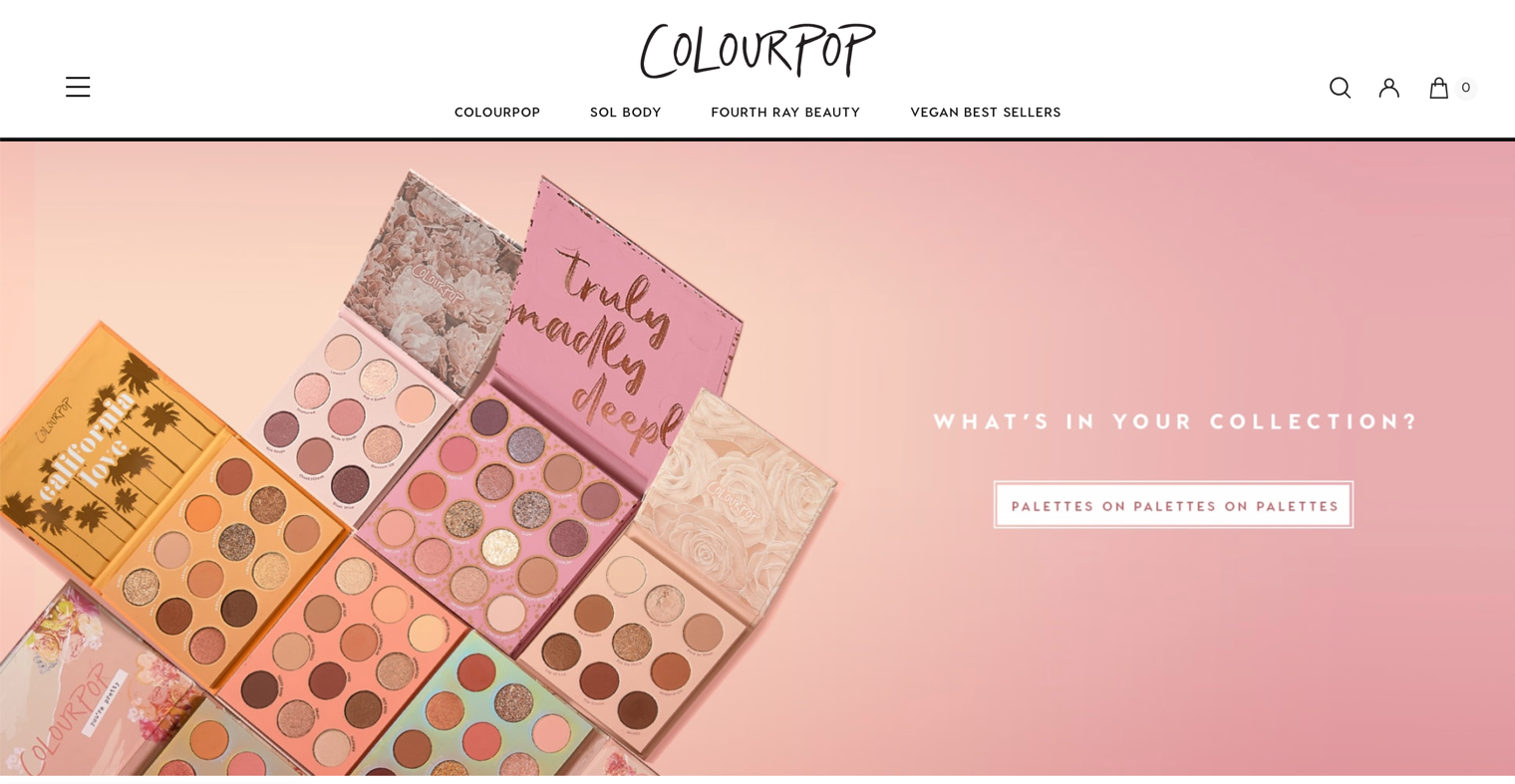
With strong traffic and conversions coming from its express-edition collaborations, the digitally native brand was content in keeping the organic momentum going.
Until, organic wasn't enough.
The Claiming
Available exclusively online and in Ulta, its focus was on catching client'due south attending on social media instead of shelves. Simply, for a make that was born organically on social media, it hadn't paid any attention to paid social media efforts.
Neglecting this category in its business strategy, meant missing out on new visitors and higher returns since it lacked in-store discoverability. In order to grow and calibration digitally, paid ads were the necessary next-footstep in its maturity.
The Strategy
Boost visitors. Increase returns. Build ROAS.
To do then meant amplifying ColourPop's message to new prospecting customers by running conversion objective campaigns on Facebook.
A focus on conversions rather than awareness was strategic — the creative showed why the production was valuable, while the ownership methodology to get that creative in front of an audition encouraged customers to have action on site.
The product was self-explanatory. Finding a way to show that it was yet loftier-quality relative to the lower price point, was the creative unlock for the brand.
One messaging angle involved running ads almost duped colors to its competitor audiences, who were selling similar products at higher markups.
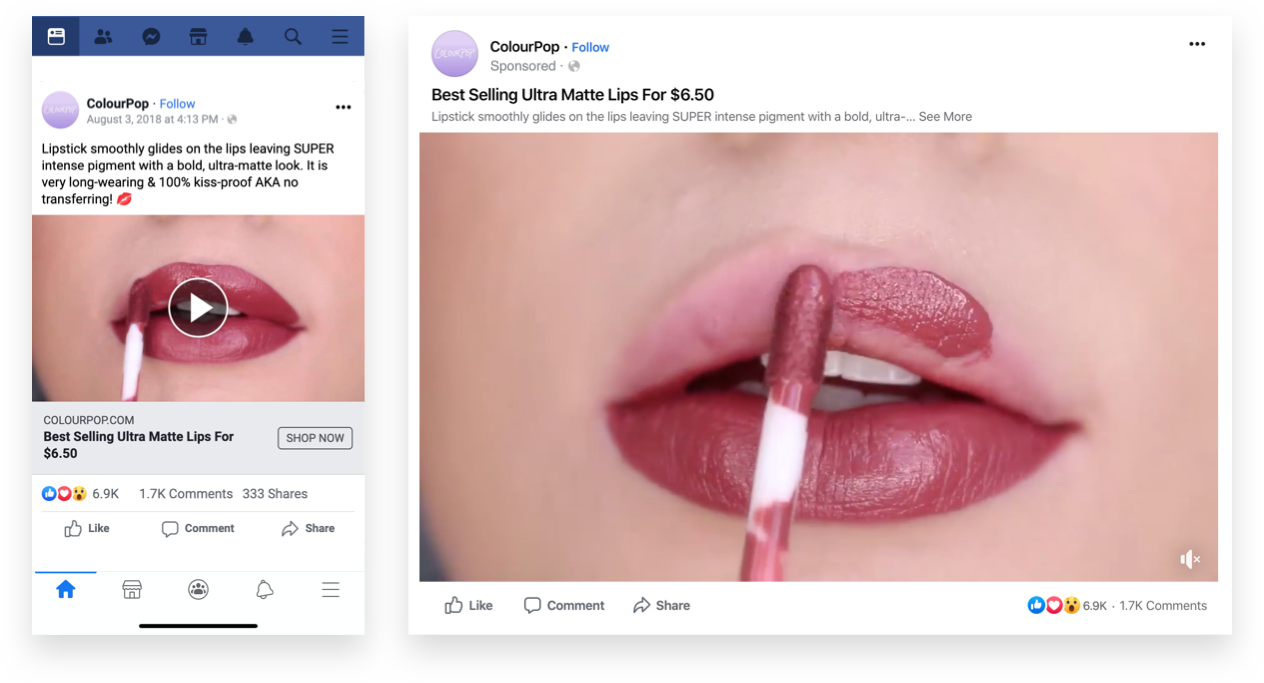
"The biggest contributor to success lay in our ability to make ColourPop stand out in a competitive market, without blatantly calling out the price of the product on the advertizement level," said Growth Guide, Michelle Luo.
"Instead, we opted to show the product in use, so that you can really run into the quality and colour payoff of the products."
Subsequently price, the major wins were ads that highlighted product quality. Whether it was up-close videos of putting lipstick on and not seeing it fissure or user-generated content – the advertising focused on the colour payoff and how good the product looked.
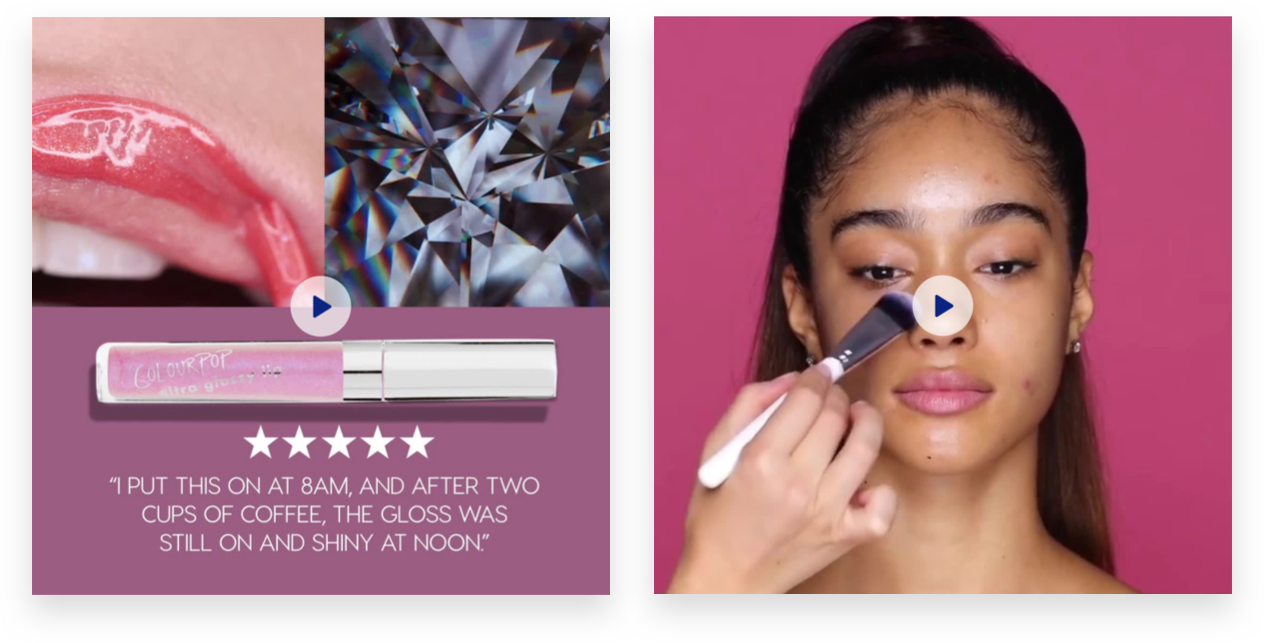
"It didn't affair if the ad was pretty," said Luo. "Information technology mattered that information technology showed real people using the product."
A website optimized for conversion rate completed the holy grail. By capitalizing on its audience with new creative and running conversion campaigns to get them onsite, it was the perfect trifecta to ensure purchases.
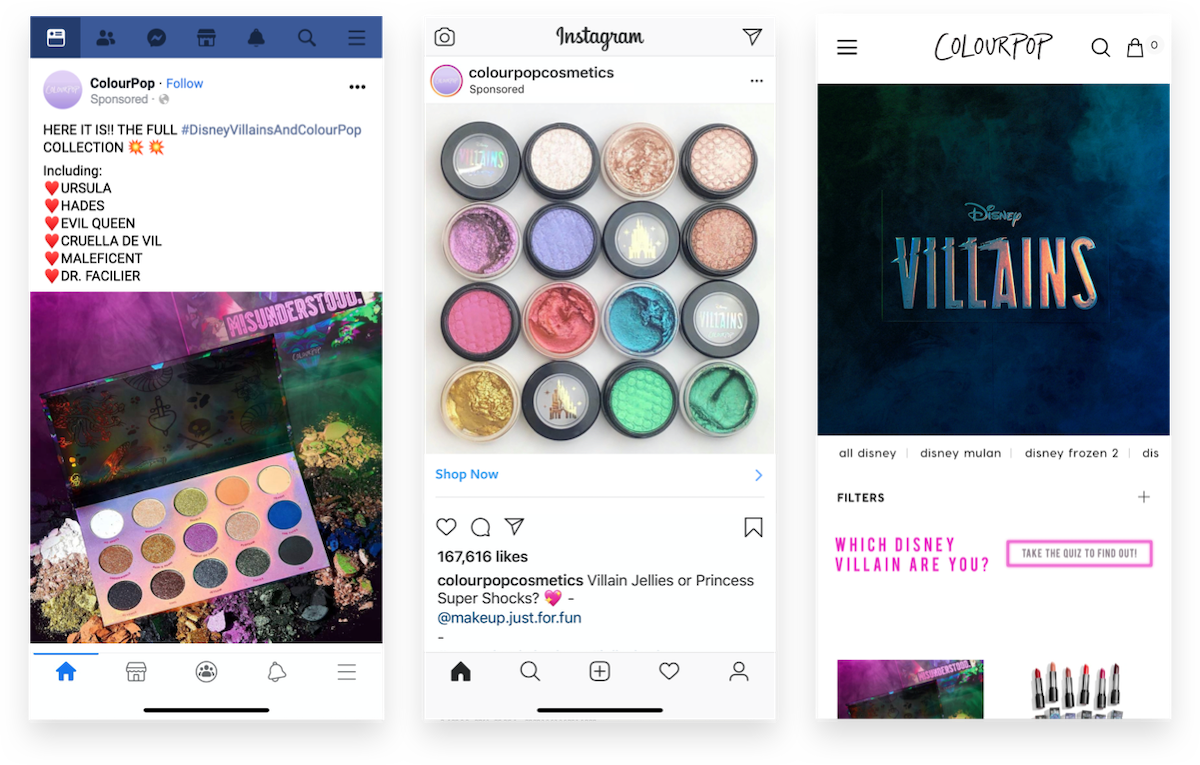
This culminated with ColourPop'southward collaboration with Disney. Each princess launched her ain makeup collection featuring limited edition products.
Thumb-stopping creative run to a Disney audience, the advert campaign smashed, with a 15x return on one-day-view, 1-day-click.
Information technology was then successful that it capitalized by following up with a Disney Villains brand-upwards line, reaping in wicked returns in one case over again.
The Results
- 5x render on prospecting campaigns
- 7.5x render on remarketing efforts
- 15x return on Disney campaigns
Bambu Earth
The Brand
Bambu Globe is a clean-dazzler brand that takes a holistic arroyo to skincare using all-natural products to restore skin to its natural state.
Amber Hawthorne founded the business over x years ago, and in early 2019 was caused by 4x400 — Common Thread Commonage's (CTC) in-business firm holding company that acquires and builds digitally native brands.
A win for everybody involved … until it wasn't.
The Challenge
For the offset few months, Bambu Earth struggled.
It was all the things you expect … low traffic and dismal conversion rate that no new creative or better-performing ad could set.
And the reason was simple: they just weren't converting enough customers (a ii.14% conversion rate at a $64 AOV just won't cutting it), which meant they couldn't afford to bulldoze more traffic.
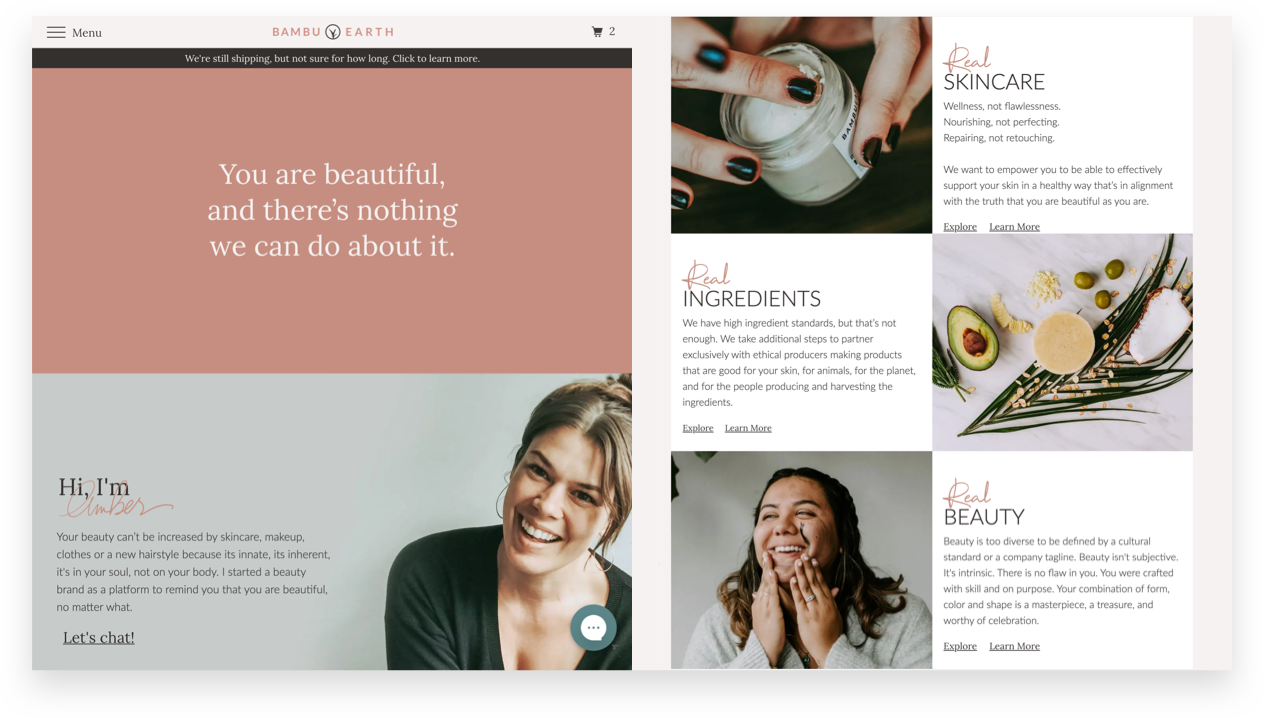
Showtime, Bambu World needed a brand refresh, both visually and conceptually. And so nosotros rebuilt the website and clarified the brand pillars that were true to the core of Amber's long-held commitments to her customers.
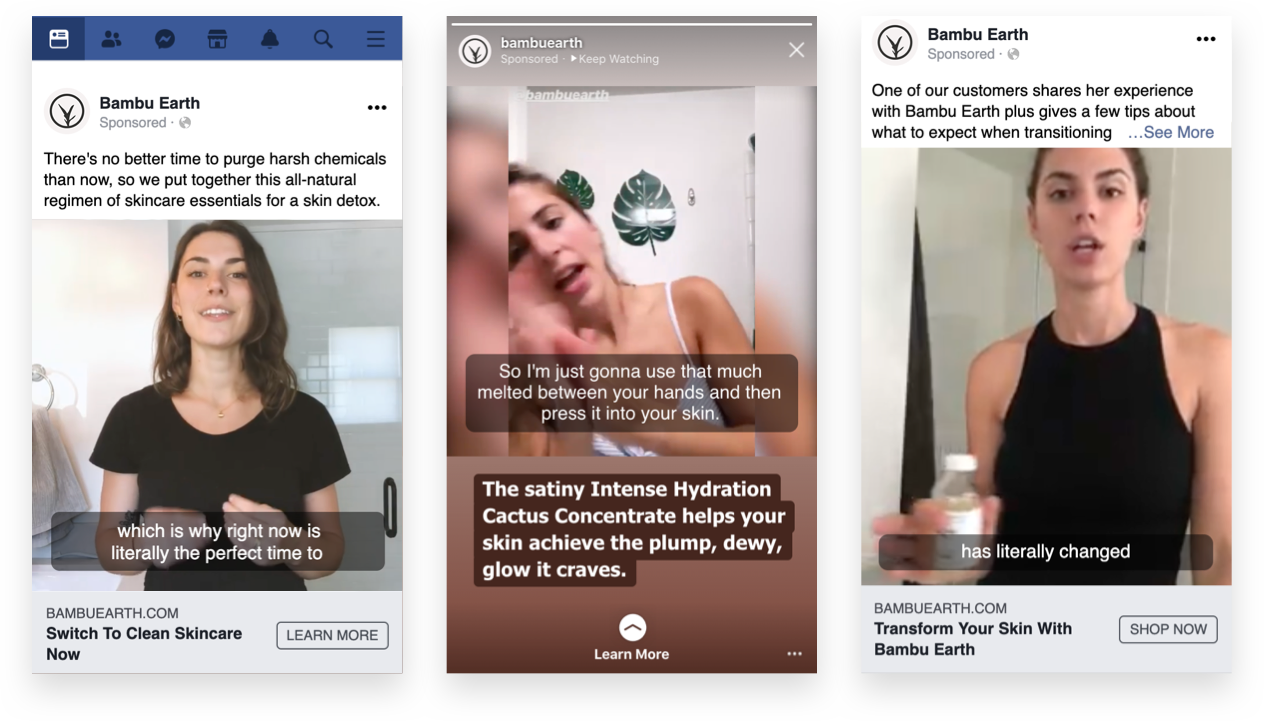
From there, it needed new advertising that reflected that. Some new UGC and reshot production-focused imagery started to fuel real growth.
"Of a sudden information technology was on the cusp of rocketship growth," says Andrew Faris, CEO of 4x400 "and we could feel information technology. We merely needed that one big push to really go u.s. over the edge."
At a outset-upwardly stage in its business concern, increasing every lever for growth ultimately matters for Bambu Earth. Notwithstanding, while information technology'due south always iterating on driving and converting traffic that will affect AOV — considering it's a consumable product, lifetime client value is the game.
The team knew that customers who converted stuck around. So they had to do two things: solve the conversion rate effect, so validate the LTV assumption.
The Strategy
"LTV is the thing that has and will continue to plow Bambu Earth into a huge player," says Faris. "At its core, we believe that'southward possible because the production is and so potent."
Knowing its products' strengths sets up the brand strategy to focus on increased spending of marketing dollars relative to its elevation-line revenue (and feel really good about the outcome).
It all starts with tracking LTV by first-product-purchased.
"If yous don't know what you're trying to track, you lot will never become skillful," says Faris. "I think this is a really underestimated footstep, is that you lot can't really do a great chore strategically without having the information on hand from the start."
For case, if LTV on a moisturizer is potent, withal costs the brand a pregnant amount to acquire that client in the starting time place — being a startup, Bambu World can't front the cash menses over the long term for it to be worth information technology to the business.
On the other hand, if the LTV is not every bit strong on the toner, but Bambu can acquire that client really cheaply — there'southward profit to be made earlier.
While LTV is the main variable at play, the lesson is that you accept to practise that relative to the toll of acquiring the client in the get-go place. This prep work isn't complete without factoring in the margin to determine where the cost value is.
Within that, a atypical strategy emerged to solve for LTV: a skin quiz.
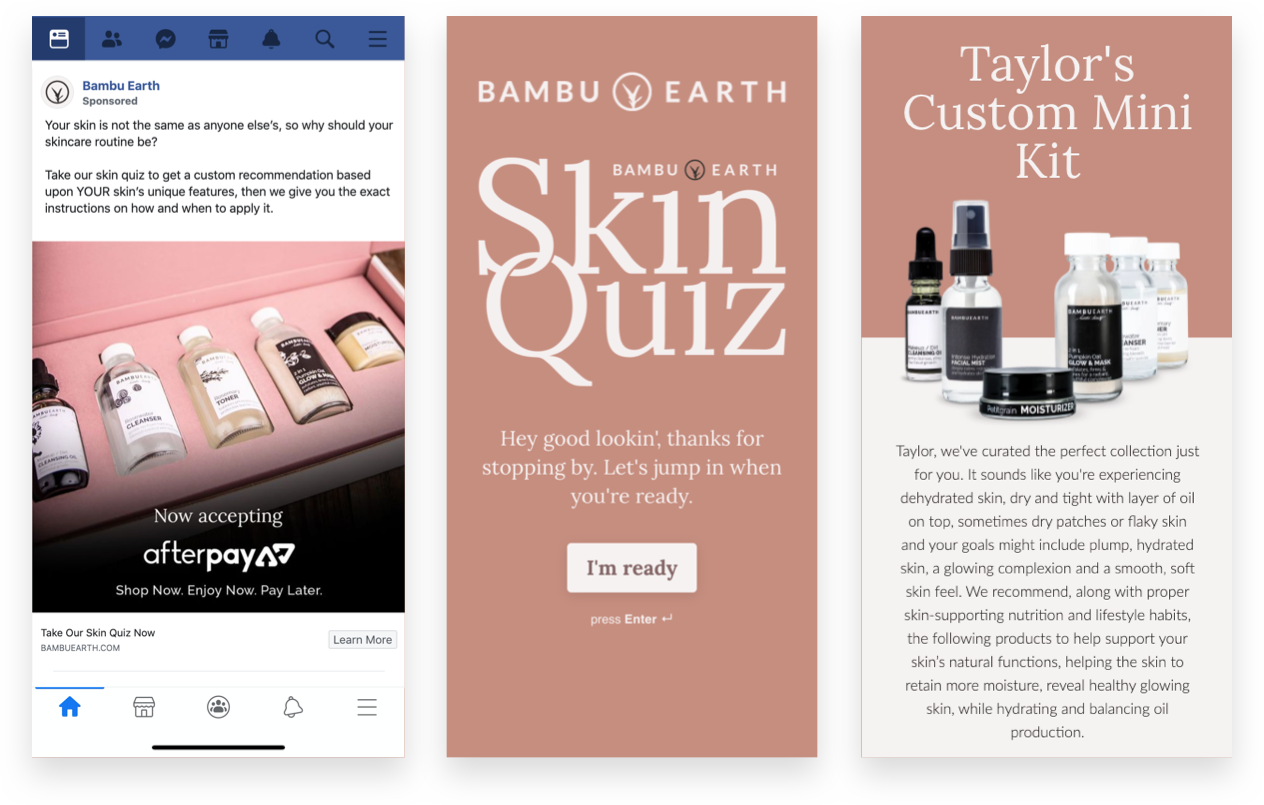
When visitors arrive, they're kicked into a quiz on the homepage with questions about their skin health, lifestyle, and goals. After finishing the quiz, customers are then given a custom production recommendation based on their results.
Retention first and foremost is about having a great product that really works for people.
"We want to make sure that we set people up for success," says Faris. "We utilize the skin quiz as a fashion to serve our customers well past giving them a product they'll dearest, which creates value for united states of america because they want to continue coming back."
Building on LTV doesn't end there. It means hammering away at every element:
- The quiz itself
- The landing page
- The ads that bulldoze visitors
- The post-buy e-mail flow
The team has personalized things even further. Offset, by adding customer service options relative to where visitors land. Second, by tracking what questions people ask about each kit and so putting those answers on each production page
Ultimately, it's well-nigh developing a full-funnel approach to acquisition and memory … as opposed to just an ad strategy. Information technology allows Bambu Earth to (at-scale) walk people into the best production for them and so sets the make up to accost that.
The Results
- 25x revenue YoY (and is now a assisting business).
- Customers who purchase through the quiz 2x value within 90 days and ii.5x AOV within xc days.
- For the calendar month of February 2020, Bambu Earth had earned every bit much acquirement from returning customers just as it did in total customer revenue overall for 2018.
Coola
The Brand
The Coola brand is the quintessential slice of California life and its products embody that ethos — from organic wellness to an outdoor, agile lifestyle. Its skincare products are eco-witting and sourced with a "farm to confront" philosophy.
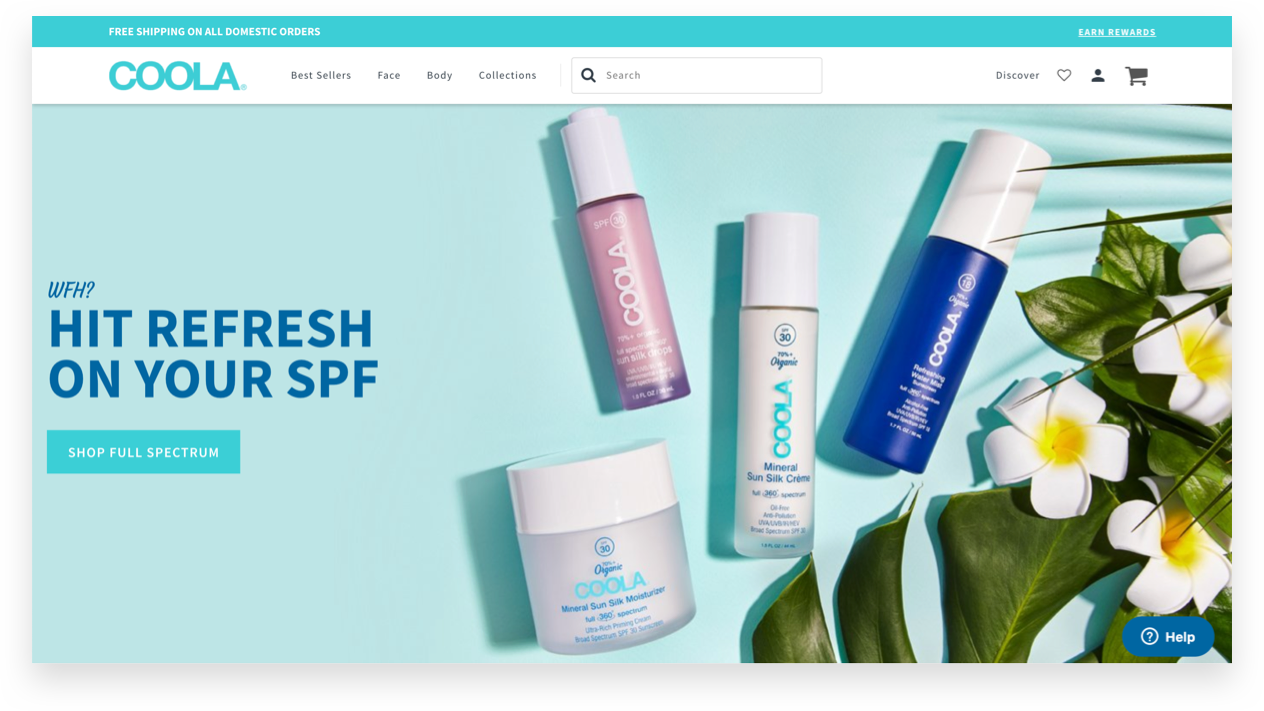
CTC caught Coola's drift and set up out to attain its goal of protecting and improving skin, utilizing paid media to increase purchases of its organic lord's day-care products.
The Claiming
Getting customers to your site doesn't always come cheap. With CPMs for paid traffic higher than nearly, the difficulty is increasing visitors without breaking the bank.
Coola was no exception. As a make that wasn't digitally native, the hurdle was gaining traffic online, non just in-stores. With a significantly high conversion rate, the opportunity was there.
The goal became getting qualified traffic to the site for a lower price.
Alongside the obstacle of increasing visitors, was increasing AOV and LTV.
Earlier launching its paid media entrada, the CTC growth squad conducted analysis and plant that sure Coola products had higher AOV on Facebook (people would tend to bundle them with other products) at the top of the funnel.
As customers went down the funnel, they'd tend to buy more.
To capitalize on this meant finding ways to increase echo purchase rate and the lifetime value of the customers that it was actually driving.
The Strategy
To combat loftier CPMs, it all came down to the creative strategy behind its social-media advertizement.
For case, 1 of the elevation products for Coola is its "Sunless Tan" — but the challenge became adjusting the advertizing messaging bending during each season to produce creative that converts year-circular.
In the winter, the focus was on keeping a bronze glow all yr. In the summer, the messaging was about accentuating your current tan with the product.
To increase visitors, the team tested dissimilar creative variations for advertising — from still images to long-grade makeup tutorials on YouTube. Through artistic testing, they found a balance.
From a prospecting standpoint, long-form YouTube videos that showed people applying the product and illustrating its core benefits resulted in enticing content with a native-experience that led to engagement.
Then in remarketing, the team focused more on the actual product itself, with gifs and still-image production photography to further inform the consumer.
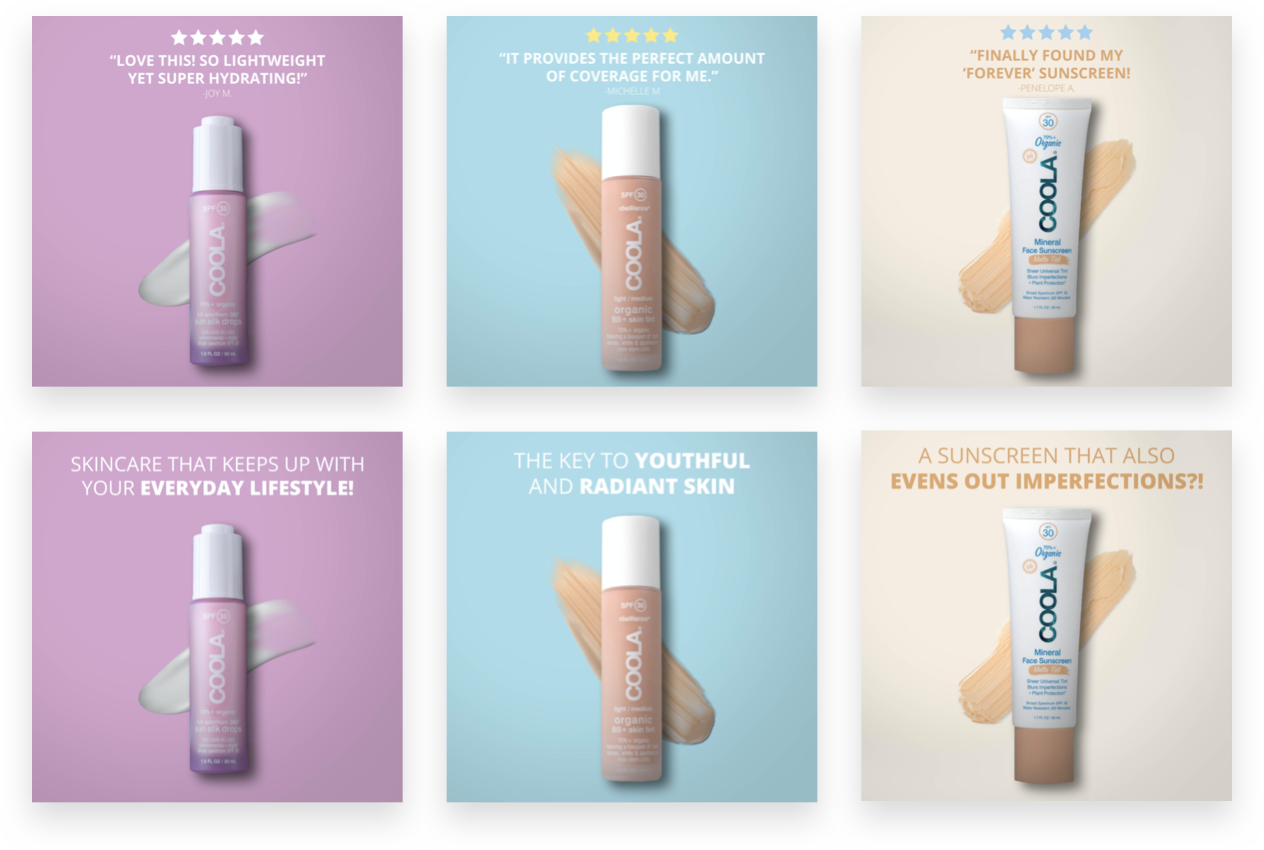
After identifying winning artistic combinations by marketing entrada stage, the team then began hyper-targeting audiences. This strategy went against the grain of CTC'due south typical buying methodology of targeting broad audiences, only it was considering of one important caveat …
The Coola product itemize is various, from lip balm and sunscreen to aging serums and BB creams.
"Instead of our normal broad prospecting and remarketing, we built specific funnels effectually key products that demonstrated high AOV," said Growth Strategist, Andy Reese.
"Whether it was the sunless tan collection or the aging serum — each diverse product had its ain funnel from meridian-to-bottom, so nosotros could hyper-target those interested."
By selling through individual product funnels, Coola offered customers the niche products they really needed — making them more likely to catechumen — instead of putting them into a standard remarketing audience where they're getting ads for products they didn't show interest in.
This became a layup for improving lifetime customer value. "Nosotros know that the replenish rate for the sunless tanner product is 60 days," says Reese. "So anywhere from 45-60 days after they've purchased, to impact LTV, nosotros'd target them with an ad to remind them to re-up on their product purchased."
Running contempo-purchaser campaigns by product funnel increased Coola's repeat purchase rate past over fifty%
Information technology wasn't just ecommerce that was reaping the benefits. Coola saw the results of Facebook advertising come through on other channels.
After running paid ads, at that place was a surge in in-store purchases of Coola products within retail locations at Ulta and Sephora. Digital strategy positively impacted the concern holistically.
The Results
- 140% YoY growth
- +l% lift in repeat customers
The Right Partner: Do You lot Need a Cosmetics Marketing Agency?
After growing brands like ColourPop, Coola, Bambu Earth, and more than … we pride ourselves on being experts in every phase of the online sales process.
From creative content to media buying, our solutions are specifically tailored to tweak the variables that create revenue.
Last, don't forget to grab all the information, tactics, and example studies in i fittingly beautiful PDF:

Reilly Roberts is the Marketing Specialist of Common Thread Collective. If you'd similar to connect with her about all things copywriting — or even ameliorate, her favorite bands — accomplish out via Twitter or LinkedIn.
Source: https://commonthreadco.com/blogs/coachs-corner/beauty-industry-cosmetics-marketing-ecommerce
Posted by: hoserearget1982.blogspot.com
0 Response to "What Is The Size Of The Makeup Industry"
Post a Comment